
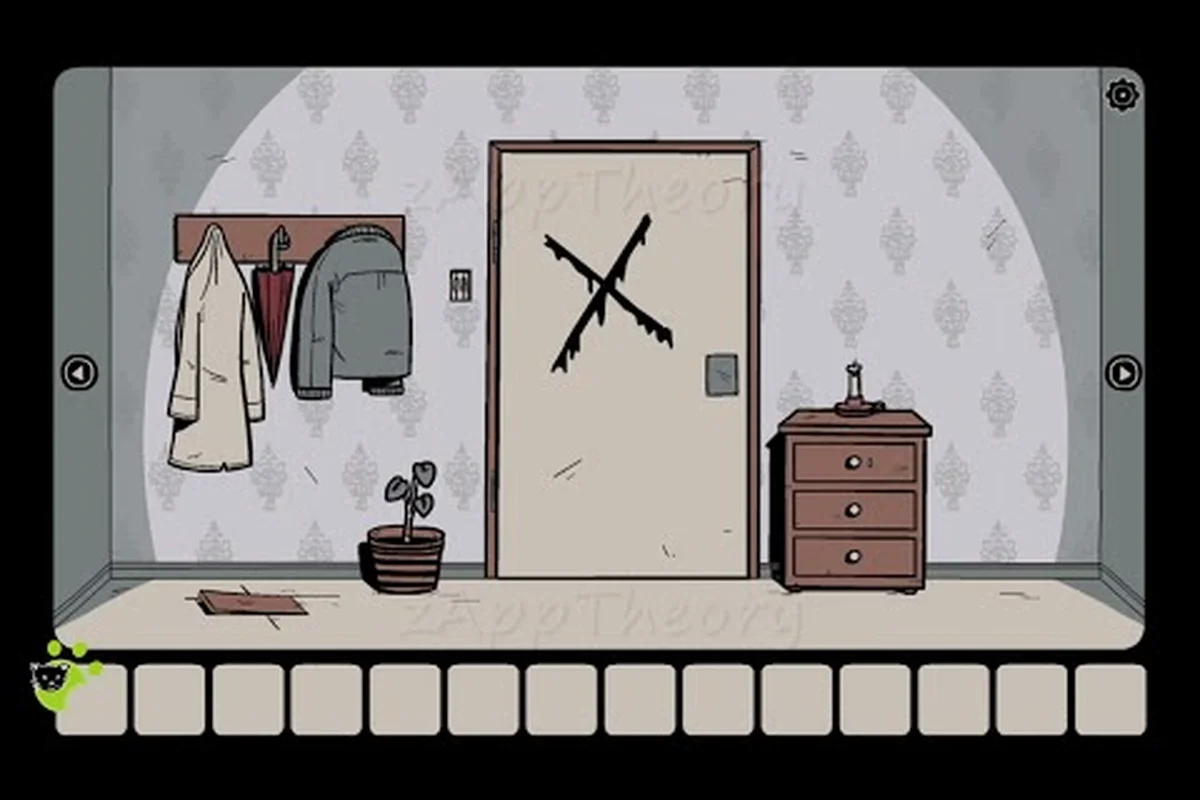
The Girl in the Window beginner guide is built for players who just tapped into a locked room, saw a face in the glass, and have no idea what to touch first. This first chapter of the Hidden Town series by Dark Dome drops you into a single-screen escape with no tutorial overlay, so the smartest opening move is a calm sweep of the room before you pick up anything. Get the search order right, learn how inventory items combine, and the rest of the puzzle chain starts to feel logical instead of random. According to the official Steam page for The Girl in the Window, the game is designed as a touch-and-tap escape room, which means every interactive surface is a potential clue if you slow down and look.
Getting Started in The Girl in the Window
The first screen looks like a messy attic, and that visual chaos is intentional. According to the official store description, the game asks you to interact with objects by touching them, find hidden inventory items, and combine those items to forge new tools. Beginners who rush the opening usually miss the most basic escape room rule of the series: you cannot solve a puzzle with an item you have not yet found, so the order in which you search the room is the order in which you will eventually progress. This is the foundation of any the girl in the window beginner guide worth reading, and it shapes how you should approach every locked drawer, every cabinet door, and every suspiciously clean shelf.
Controls and Interface Basics
The game uses point-and-tap controls on both mobile and PC, with no joystick or movement stick to worry about. On the Steam version, left-click selects an object, and right-click (or a dedicated on-screen button) inspects an already selected item more closely. The inventory bar along the bottom is your lifeline, and it auto-expands when an item is picked up.
| Action | Mobile (Tap) | PC (Mouse) | Common Mistake |
|---|---|---|---|
| Select object | Single tap | Left-click | Tapping twice quickly, which can skip the interaction |
| Inspect / rotate | Long press | Right-click | Forgetting to inspect, which hides clue text |
| Pick up item | Tap item, then "Take" | Left-click, then "Take" | Trying to drag directly into the inventory bar |
| Combine items | Tap item A, tap item B | Click A, click B | Combining in the wrong order, which "wastes" a turn |
| Use hint | Tap lightbulb | Click lightbulb | Burning the full hint chain on a single puzzle |
What You Actually See in the First Room
When the door clicks shut behind Dan, you are standing in a single circular room framed by four walls and a ceiling. Community walkthroughs describe the same basic layout repeated in most openings: a desk near the window, a shelf with knickknacks, a wardrobe, a boarded-up side door, and a small cabinet that looks decorative but is not. The girl in the window game guide consensus is to treat every wall as a strip of three to five hotspots, because the early game hides clues on the edges of furniture, not in the middle.
The Search Order That Unlocks the Room
Most beginners who get stuck in the first ten minutes are not failing a hard puzzle. They are failing to clean the room in the right order, which means they reach a locked object without the key item they need. The strategy guide approach is a three-pass sweep, and it works because it mirrors the way the level designer layered the room.
Pass 1: Surface Pickup
Walk the room once and grab anything that is clearly a standalone inventory object. That usually means small loose items sitting on the desk, the wardrobe handle if it falls off when tapped, a coin or two on the floorboards, and any paper scraps that auto-add to the journal. The girl in the window how to play rhythm begins here: collect first, think second, because you cannot combine items you do not yet own.
Pass 2: Inspect and Rotate
Once the obvious pickups are gone, slow down and use the long-press / right-click inspect tool on everything still attached to the walls. A "clean" painting may have a key taped to its back. A locked drawer may have a code scribbled on its inside panel, only visible when you rotate the camera angle. This pass is where most beginners skip ahead and pay for it later, because the inspect pass is where the room tells you which locks to leave alone and which ones to attack first.
Pass 3: Combine and Use
Only after Passes 1 and 2 should you start combining items. Combining too early produces "nothing happens" reactions that look like bugs but are actually the game waiting for a missing component. The third pass is also when you start using items on the environment, not on other items. Using the coin on a piggy bank is an environment use, not a combination, and the distinction matters for the hint system to count it as progress.
| Pass | What You Do | Time Cost | Stops You Getting Stuck On |
|---|---|---|---|
| Surface pickup | Grab loose inventory items | 2-4 min | "I have nothing to combine" dead ends |
| Inspect & rotate | Long-press every fixed object | 3-5 min | "I cannot find the code" blind spots |
| Combine & use | Merge items, then apply to environment | 5-10 min | Puzzles that need a 2-item chain |
Item Combinations and Inventory Management
The girl in the window tips and tricks discussion always comes back to inventory, because the inventory bar is the only place items can be combined, and you only get a few slots before the game starts auto-stacking. The most common beginner failure is combining two items in the wrong order, which silently consumes your turn without producing anything usable, and the only way to recover is to reload the previous room state, since the game does not feature a manual undo for failed combinations.
How Two-Item Combinations Work
Every recipe in the opening chapter is a two-item merge, and each merge is non-reversible. Tap item A, then tap item B, and a new item replaces both. If the merge is wrong, both items vanish from the inventory, and the game punishes you by forcing you to re-search the room for replacements. The safe rule of thumb is to combine only when you have read a clue that specifically points to a two-item solution, such as a note that says "something sharp will open the soft thing." This is also where the observation-focused spoiler-free tips approach pays off, because reading every scrap of paper first turns guessing into confirming.
Inventory Space and Stacking Rules
Your inventory holds about eight slots, and consumable items like matches or coins stack inside their own slot up to a cap of three. Key items never stack, so a found key takes a full slot until used. When the bar fills up, the game refuses new pickups until you combine, use, or drop something, and dropping an item on the floor is not a soft action: dropped items respawn in a slightly different spot, which can break the search order on a re-sweep.
| Item Type | Stack Cap | Slot Cost | Example |
|---|---|---|---|
| Key item | 1 | 1 slot | Brass key, folded note |
| Consumable | 3 | 1 slot | Matches, coins, cloth strips |
| Combine output | 1 | 1 slot | Sharpened stick, oiled rag |
| Story token | 1 | 1 slot | Locked locket, polaroid |
Using the Hint System Without Wasting It
The hint system is the most generous tool in the girl in the window strategy guide toolkit, but it is also the most commonly wasted. Each room gives you a chain of three escalating hints, and using the third hint usually reveals the answer outright, which means a beginner who burns all three hints on a single puzzle arrives at the next puzzle with no hints left and no practice on the hint-reading skill itself. Community reports on Dark Dome forums consistently show that players who ration hints to one per room clear the first chapter in roughly half the time of players who binge them.
Hint Escalation Explained
The first hint in any chain is a directional nudge, telling you which area of the room to focus on. The second hint names the type of interaction required, such as "you need to combine two items" or "look behind something." The third hint names the actual solution, which makes the third hint the soft-reset button. The smart play is to commit at least five real minutes to the puzzle before reading the first hint, and to read the first two hints in sequence rather than skipping straight to the third. This is the same pacing logic that the pro tips for stuck players build on, since hint rationing compounds over the whole chapter.
When to Spend a Hint
The right time to spend a hint is when you have completed the search order, attempted at least one combination, and still feel stuck. The wrong time is when you have not yet done the inspect pass, because the inspect pass often generates the clue that the first hint would have given you for free. The girl in the window how to play loop improves dramatically once a player learns to delay hint spending until both the surface and inspect passes are complete, which is why this single rule is in nearly every walkthrough's first page.
| Hint # | What It Reveals | Best Time to Use | Common Misuse |
|---|---|---|---|
| First | Which area of the room | After surface + inspect pass complete | Skipping it because "I want the answer" |
| Second | What kind of action is needed | After one failed combination | Skipping it because the area hint was obvious |
| Third | The literal solution | Only when fully blocked | Burning it because hints feel cheap |
Common Beginner Traps and How to Avoid Them
The first chapter of the game has a few famous soft-locks that the community has nicknamed over the years. None of them are bugs, but they look like bugs because the game gives no error message when you trigger them. Knowing the traps is half of any useful the girl in the window game guide, because the other half is just the search-order discipline already covered.
The Wardrobe Handle Trap
The wardrobe handle is a tempting first pickup because it looks important and is easy to grab. The trap is that the handle is meant to be left in place until you find the screwdriver, because prying the handle off early without the screwdriver does nothing, and the handle cannot be reattached. Beginners who yank it first end up ten minutes later trying to figure out why the wardrobe will not open, then having to backtrack through the room looking for a way to reattach what they prematurely removed.
The Code Lock Trap
There is a small code lock in the opening room that displays four symbols, and many beginners try to brute-force it by tapping symbols in random order. According to community walkthrough data, the code is hidden in plain sight in the inspect pass, usually on the back of a frame or under a rug. The trap is treating the code lock as a math problem when it is actually a reading problem.
The Journal Clue Trap
The in-game journal is a system for organizing notes, and beginners often ignore it, treating it as flavor text. The journal is actually the most reliable hint system, because it auto-collects every scrap of paper, every symbol, and every number you encounter. When stuck, the answer is almost always in the journal, and the trap is having a clean journal because you were too impatient to read what was already collected. This is one of those situations where a side-by-side read of the beginner save and controls walkthrough helps, because managing the journal mid-puzzle is a control-level skill.
| Trap | Looks Like | Actually Is | Fix |
|---|---|---|---|
| Wardrobe handle | A free pickup | A puzzle gate | Wait until you have the right tool |
| Code lock | A random combination | A reading comprehension puzzle | Re-read the journal from top to bottom |
| Journal text | Flavor writing | The hidden answer key | Slow down and read every scrap on pickup |
| Locked drawer | A dead end | The next gate in the chain | Confirm you have searched the rest of the room |
Putting It All Together: Your First Run Checklist
A clean first run of the opening chapter should follow a predictable cadence: load in, do a slow visual sweep, run the three-pass search, manage the journal, ration hints, and only then start combining. Players who follow this cadence usually clear the first room in 20-30 minutes, while players who skip steps often take over an hour and still feel lost. The girl in the window strategy guide approach is less about puzzle-solving talent and more about respecting the room's layering, which the developer designed to reward careful players.
A Repeatable Opening Routine
-
Spend 60 seconds on a slow visual sweep of all four walls before touching anything.
-
Run Pass 1: pick up every loose inventory item, including coins and scraps.
-
Run Pass 2: long-press or right-click every fixed object, including the back of paintings and under rugs.
-
Open the journal and read every entry from top to bottom in order.
-
Run Pass 3: combine items only after reading a clue that points to the combination.
-
Use the first hint only if stuck after both passes and at least one combination attempt.
-
Save the game after every solved puzzle, since the chapter autosaves only on room transitions.
Measuring Your Progress
If you finish the opening room in under 30 minutes, your search order is clean. If you finish in 45 minutes, you probably combined something too early or burned a hint you did not need. If you finish in over an hour, you likely missed a clue on the inspect pass, and re-running that pass on a second playthrough is the fastest way to internalize the system. The same pacing logic shows up in the complete chapter walkthrough, which expands the routine into every room of the first chapter.
Frequently Asked Questions
How long does it take to escape the first room in The Girl in the Window?
Most first-time players clear the opening room in 20-45 minutes, depending on whether they slow down for the inspect pass or rush the combinations. According to community data from walkthroughs, players who follow a three-pass search order consistently finish in under 30 minutes, while players who burn the full hint chain on the first puzzle often take over an hour.
Should I read every scrap of paper in the room?
Yes, because every scrap auto-adds to the in-game journal, and the journal is the most reliable answer key for the first chapter. The girl in the window tips and tricks community consistently ranks "read the journal twice" as the single biggest time-saver, since the game hides the codes and order hints in plain text rather than in visual puzzles.
Can I undo a wrong item combination?
No, combinations in The Girl in the Window are non-reversible, and the game gives no warning before consuming both items. The safe rule is to combine only after a clue in the journal specifically points to a two-item solution, and to keep spare components in mind so a wrong combination does not soft-lock your run.
Does the hint system cost anything in the game?
The hint system is free to use, but each room only provides a chain of three escalating hints, and once the chain is spent it does not refresh. The girl in the window strategy guide approach is to spend at most one hint per room, and to use it only after both the surface pickup and inspect passes are complete, so you arrive at later puzzles with hints still in reserve.
Is The Girl in the Window connected to other Dark Dome games?
Yes, it is the first chapter of the Hidden Town series and shares its universe with later entries like The Ghost Case. According to the official store description, the games can be played in any order, but playing them in release order reveals how the stories connect, and the chapter ends with a hook that makes the next entry feel like a natural follow-up rather than a separate game.