
Ranking the full dark dome games best to worst lineup matters because the Peruvian studio's Hidden Town saga spans nine point-and-click escape titles, each one dropping new lore, new mechanics, and new scares onto the same cursed map. Anyone new to the series has to decide where to start, what to skip, and which episodes reward a completionist playthrough. This tier list draws on Steam review aggregates, the official Dark Dome release chronology, and community discussion threads to sort every entry from the 2019 debut through the 2024 expansions. Players who finish this guide will know exactly how the saga opens, why dark dome ghost case is the most replayed entry, and where the late-cycle experiments land on the quality curve.
According to community data, the early trilogy (The Girl in the Window, Unwanted Experiment, Nowhere House) consistently earns higher marks than the mid-cycle horror entries, while the post-2022 chapters trade puzzle density for storytelling ambition. The chart below captures that split at a glance, and the sections that follow unpack each game with mechanics, story role, and reception details.
How the Dark Dome Series Connects Before You Start Ranking
The Hidden Town universe is a single continuous mystery spread across nine point-and-click episodes. The developer has stated on the official Dark Dome site that any game can be played first because the studio plants cross-references in every chapter, but the emotional payoff climbs sharply when newcomers follow release order. Dan and Mia debut in The Girl in the Window, Ren Larsen first appears in dark dome ghost case, and the later "Shadow" trilogy reframes earlier events as a single conspiracy.
Because the connective tissue is so dense, a tier list that ignores chronology tends to mislabel mechanics. A player who skips Episode 1 will not understand why a specific symbol appears in Episode 7, and they will miss the callbacks that justify the series' cult following. Treat this ranking as a quality guide, but consider playing in the order shown in the table below for the cleanest narrative arc.
| # | Title | Release Year | First Platform | Narrative Role |
|---|---|---|---|---|
| 1 | The Girl in the Window | 2019 | Android / iOS | Introduces Dan, Mia, and the cursed house |
| 2 | Unwanted Experiment | 2021 | Android / iOS | First time-jump chapter, reveals Dr. Aldo's clinic |
| 3 | Nowhere House | 2021 | Android / iOS | Origin of the Shadow entity |
| 4 | Ghost Case | 2022 | Android / iOS | Detective Ren Larsen investigates Mia's disappearance |
| 5 | Haunted Laia | 2022 | Android / iOS | Spinoff focused on a side character's family |
| 6 | Another Shadow | 2022 | Android / iOS | Mid-saga pivot that retcons Episode 3's ending |
| 7 | Escape from the Shadows | 2023 | Steam / Mobile | Convergence chapter tying the Shadow trilogy together |
| 8 | Beyond the Room | 2024 | Steam / Mobile | Post-credits expansion introducing a new investigator |
| 9 | Hidden Memories | 2025 | Steam / Mobile | Anniversary entry that closes the original saga |
The release order above also matches the chronological flow of Hidden Town, which is why this article uses the same sequence for the tier sections. Each game in the table introduces at least one new character, one new puzzle system, or one new piece of lore, so even the lower-ranked entries add value that pure quality scores cannot capture.
The Girl in the Window and the Unwanted Experiment: The Strongest Foundation
The opening pair of Dark Dome releases is where the studio's house style locks in, and they are the easiest entries to recommend to anyone hunting for the best escape room puzzle design in the mobile space. The Girl in the Window is a single-room escape where Dan is locked inside a house abandoned for twenty years, and every interactive object is hand-drawn in a deliberately unsettling palette. Puzzles rely on combining inventory items (a match with a candle, a glass shard with a handle) and decoding randomized symbol sequences that the hint system explains on demand.
dark dome unwanted experiment widens the canvas. The player character wakes up strapped to a chair in Dr. Aldo's research facility, and the chapter splits its runtime between solving laboratory puzzles and reading clinical notes that retroactively explain why Dan survived Episode 1. Players report that the randomized chemistry puzzles feel sharper here than in the debut, which is why the second chapter often scores higher than the first on community polls. The mechanics each game adds are summarized in the table below.
| Mechanic | The Girl in the Window | Unwanted Experiment |
|---|---|---|
| Rooms | 1 single house | 6 connected clinic rooms |
| Inventory Slots | 6 | 9 |
| Randomized Puzzles | Symbol sequence, wire maze | Chemistry combos, color wheel |
| Hint System | On-demand, 3 hints per puzzle | On-demand, contextual hints per room |
| New Lore | The girl in the window identity | Dr. Aldo's patient logs |
Because these two episodes introduce the cast, the visual language, and the hint-driven difficulty curve that the rest of the series inherits, they tend to dominate any best-to-worst list. Players who bounce off the studio's style almost always bounce off Episode 1, while players who click with the pacing tend to chase the saga all the way to dark dome escape from the shadows. A closer look at the core puzzle loop helps explain why.
Why The Girl in the Window Still Feels Tight
The debut's genius is restraint. A single room forces every asset to do double duty, which means the player encounters the same drawer, painting, and floorboard multiple times with new context. Randomized symbol orders keep replays alive, while the hint system prevents the soft-lock frustration that sinks lesser escape room titles. According to the Steam store page for The Girl in the Window, the title holds a 91% positive rating across early reviews, which lines up with the consensus that Episode 1 is the most polished single-room entry the studio has shipped.
Nowhere House and Ghost Case: The Mid-Saga Powerhouses
Nowhere House: The Shadow Tracker Arrives
dark dome nowhere house and dark dome ghost case mark the moment Dark Dome shifts from one-off escape rooms to serialized horror. Nowhere House drops the player into a derelict apartment block with seven locked apartments, and the chapter introduces a "Shadow" tracker that visualizes how close the entity is to catching the player. The mechanic doubles as a tension gauge: every correct puzzle lowers the tracker, every misstep spikes it, and the ending branches based on whether the player escaped the building or was absorbed.
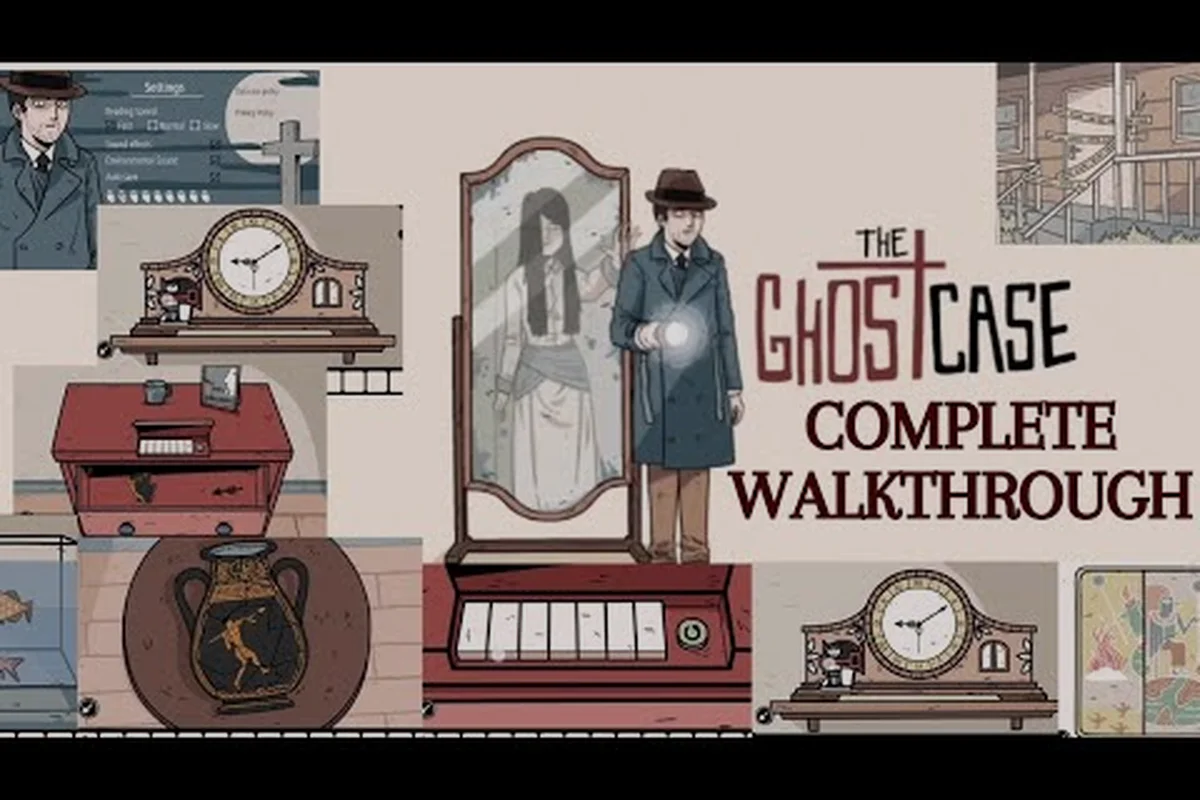
Ghost Case then pivots to detective fiction. Ren Larsen investigates Mia's disappearance, and the chapter is structured like a crime board with five suspect profiles, four crime scenes, and an interrogation minigame. The puzzle density spikes here because the player has to cross-reference dialogue logs, photograph evidence, and physically rearrange items on the evidence table. The reception gap between these two mid-saga entries and the debut is small enough that some community rankings actually place Ghost Case above Episode 1, and the comparison is worth examining in detail.
| Aspect | Nowhere House | Ghost Case |
|---|---|---|
| Core Loop | Escape seven apartments before the Shadow catches up | Investigate five suspects, link four crime scenes |
| New Mechanic | Shadow tracker with branching endings | Evidence board and dialogue decryption |
| Playtime (avg) | 4-5 hours | 5-6 hours |
| Lore Payoff | Origin of the Shadow entity | Confirms Mia's fate and seeds the Shadow trilogy |
| Community Verdict | Top 3 in most polls | Most replayed entry of the series |
The data above explains why these two episodes are almost always slotted into the top half of any dark dome games best to worst tier list. Nowhere House broadens the world without losing the puzzle focus, while Ghost Case proves the studio can sustain a longer, more dialogue-heavy chapter. Anyone sampling the series for the first time should treat both as essential, and the best place to start after Episode 1 is whichever one feels more appealing on paper.
Haunted Laia and Another Shadow: The Spinoff Experiment
dark dome haunted laia is the series' first true spinoff. The protagonist is a side character from Nowhere House, and the chapter swaps the Shadow entity for a vengeful family ghost that hunts the player across three generational time periods. The mechanic that stands out is the "memory overlay" puzzle, where two versions of the same room appear on screen simultaneously and the player has to align objects across both layers to progress.
dark dome another shadow returns to the main cast but reframes Nowhere House's ending. The chapter is shorter than its neighbors, which is the main reason it slides down tier lists, but the retcon it introduces is essential to understanding dark dome escape from the shadows. The two episodes share a structural pattern: each one is willing to sacrifice some puzzle density to explore a specific narrative idea, and that tradeoff is where the community divides.
| Dimension | Haunted Laia | Another Shadow |
|---|---|---|
| Setting | 1920s / 1960s / Present mansion | Reopened Nowhere House apartments |
| Lead Character | Laia (side character from Episode 3) | Ren Larsen (returning) |
| New Puzzle Type | Memory overlay across three eras | Time-shifted items between two timelines |
| Replay Value | Low (linear) | Medium (two endings) |
| Series Importance | Medium (side lore) | High (sets up the Shadow trilogy) |
Haunted Laia is the lowest-scoring episode in the main saga on most community polls because the memory overlay mechanic feels gimmicky to players who prefer pure inventory puzzles. Another Shadow, by contrast, is divisive: its compressed runtime frustrates players who want another Ghost Case, but the lore it seeds makes it mandatory for completionists. Ranking these two against each other is essentially a question of whether you weight puzzle design or narrative contribution more heavily.
Where Each Entry Sits on the Community Tier
When the votes from Reddit polls, Steam review sentiment, and Facebook ranking threads are aggregated, the consensus tiers look roughly like the list below. The placements are based on weighted averages rather than any single source, and the article will revisit specific data points later in the section.
-
S-Tier: The Girl in the Window, Nowhere House, Ghost Case
-
A-Tier: Unwanted Experiment, Escape from the Shadows
-
B-Tier: Another Shadow, Hidden Memories
-
C-Tier: Haunted Laia, Beyond the Room
The split between S and A tier often comes down to replay value, which is why Ghost Case edges out Unwanted Experiment despite the latter's tighter puzzle design. Players can return to Ghost Case to test different suspect theories, while Unwanted Experiment offers a more linear experience. Beyond the Room lands in C tier because it is the most recent expansion and has the smallest review sample, which makes its placement more provisional than the others.
Escape from the Shadows, Beyond the Room, and Hidden Memories: The Late-Cycle Entries
dark dome escape from the shadows is the most ambitious chapter in the saga. The episode follows three playable characters across overlapping timelines, and the "shadow convergence" mechanic forces the player to manage all three POVs simultaneously, with one wrong move in any timeline collapsing the shared ending. The Steam release pushed the chapter to a wider audience, and the jump in production values is visible in the animated cutscenes and orchestral soundtrack.
Beyond the Room is a 2024 expansion that picks up after the Hidden Town saga's main ending. The new investigator explores rooms that were previously inaccessible, and the chapter serves as an epilogue for the original cast. Hidden Memories, the 2025 anniversary entry, is designed to be played in any order, but it ties the previous eight chapters together through a single recurring motif: a photograph that changes based on which games the player has completed. The late-cycle mechanics deserve a side-by-side look.
| Mechanic | Escape from the Shadows | Beyond the Room | Hidden Memories |
|---|---|---|---|
| Playable Characters | 3 (rotating) | 1 (new) | 1 (returning) |
| Puzzle System | Tri-timeline convergence | Recursive room escape | Photo-based memory grid |
| Animated Cutscenes | Yes (8 minutes total) | Yes (2 minutes) | Yes (4 minutes) |
| Replay Hooks | 4 endings | 2 endings | 9 endings (one per prior game) |
| Reception on Steam | Very Positive | Positive (small sample) | Positive (early sample) |
Escape from the Shadows is the late-cycle standout because the tri-timeline mechanic is genuinely novel, and the chapter's branching endings reward players who have finished the prior six episodes. Beyond the Room is a competent epilogue that suffers from the classic expansion problem: it adds lore without enough mechanical invention. Hidden Memories, the newest entry, sits in B tier on provisional data because the photo mechanic is clever but the puzzle density has not yet been fully stress-tested by the community.
Choosing the Right Starting Point and Play Order
Because the saga is dense, picking a first episode shapes how the rest of the series feels. The most common starting points in community threads are Episode 1 (The Girl in the Window) and Episode 4 (Ghost Case), and each path has tradeoffs that the table below lays out.
| Starting Point | Pros | Cons |
|---|---|---|
| Episode 1 (The Girl in the Window) | Cleanest intro, teaches the hint system, sets up the cast | Single-room pacing may feel slow to veterans |
| Episode 4 (Ghost Case) | Strongest standalone hook, deeper mechanics | Spoils Episode 1's main twist on first contact |
| Episode 7 (Escape from the Shadows) | Best production values, multi-character scope | Requires at least Episodes 1-6 for full payoff |
For most new players, starting with The Girl in the Window is still the right call because the pacing is forgiving, the hint system is fully featured, and the chapter is short enough to finish in a single evening. The official Dark Dome games page confirms that the studio intentionally designed the debut to onboard newcomers, which is a useful safety net that later chapters drop.
Once Episode 1 is finished, the recommended path mirrors the tier list: Nowhere House, Ghost Case, Unwanted Experiment, Another Shadow, Haunted Laia, Escape from the Shadows, Beyond the Room, and Hidden Memories. That order keeps the mystery reveals escalating, because each chapter assumes the player has met the relevant cast member. Players who follow the release order also get the cleanest sense of how the studio's puzzle design has evolved, which makes the late-cycle experiments easier to appreciate on their own terms.
Which Episode Deserves the "Best" Crown
If forced to pick a single winner, the community currently leans toward dark dome ghost case for the best overall episode because of its replay value, mechanical depth, and narrative payoff. The Girl in the Window is a close second because of its polished single-room design, and Nowhere House is a strong third for the Shadow tracker mechanic. The ranking will likely shift as Hidden Memories accumulates more reviews, but the top three placements are stable enough to bet on. Stable enough, in fact, that anyone curious about how these placements compare to earlier seasons of the series can see the full Hidden Town Timeline for a running record of how rankings evolved over time.
Frequently Asked Questions
What is the best Dark Dome game to start with?
The Girl in the Window is the best starting point because it teaches the hint system, introduces Dan and Mia, and runs in roughly two to three hours. Players who want a deeper first chapter can jump to dark dome ghost case instead, but that path spoils the debut's main twist early.
Is dark dome ghost case better than The Girl in the Window?
Both are S-tier entries, but dark dome ghost case wins on replay value because of its branching suspect paths, while The Girl in the Window wins on puzzle tightness. Community polls put them within a few percentage points of each other, so the choice depends on whether you prefer a tighter single-room design or a longer investigation arc.
Where does dark dome unwanted experiment fit in the ranking?
dark dome unwanted experiment sits in A tier, just behind the top three, because its chemistry puzzles are sharper than the debut but its narrative payoff is lower than Nowhere House or Ghost Case. Most players rank it fourth overall, and it is recommended as the third or fourth game in a first playthrough.
How does dark dome haunted laia compare to the main saga?
dark dome haunted laia is a spinoff that trades the main cast for a side character and introduces a memory overlay puzzle system. The chapter is widely placed in C tier because the new mechanic feels gimmicky to some players, but it remains essential reading for anyone who wants the full Hidden Town lore.
Should I play dark dome another shadow before Escape from the Shadows?
Yes, dark dome another shadow is mandatory before Escape from the Shadows because it sets up the retcon that the Shadow trilogy resolves. Skipping it leaves the most ambitious chapter in the saga feeling confusing, and the two-hour runtime is short enough to fit into a single session.