
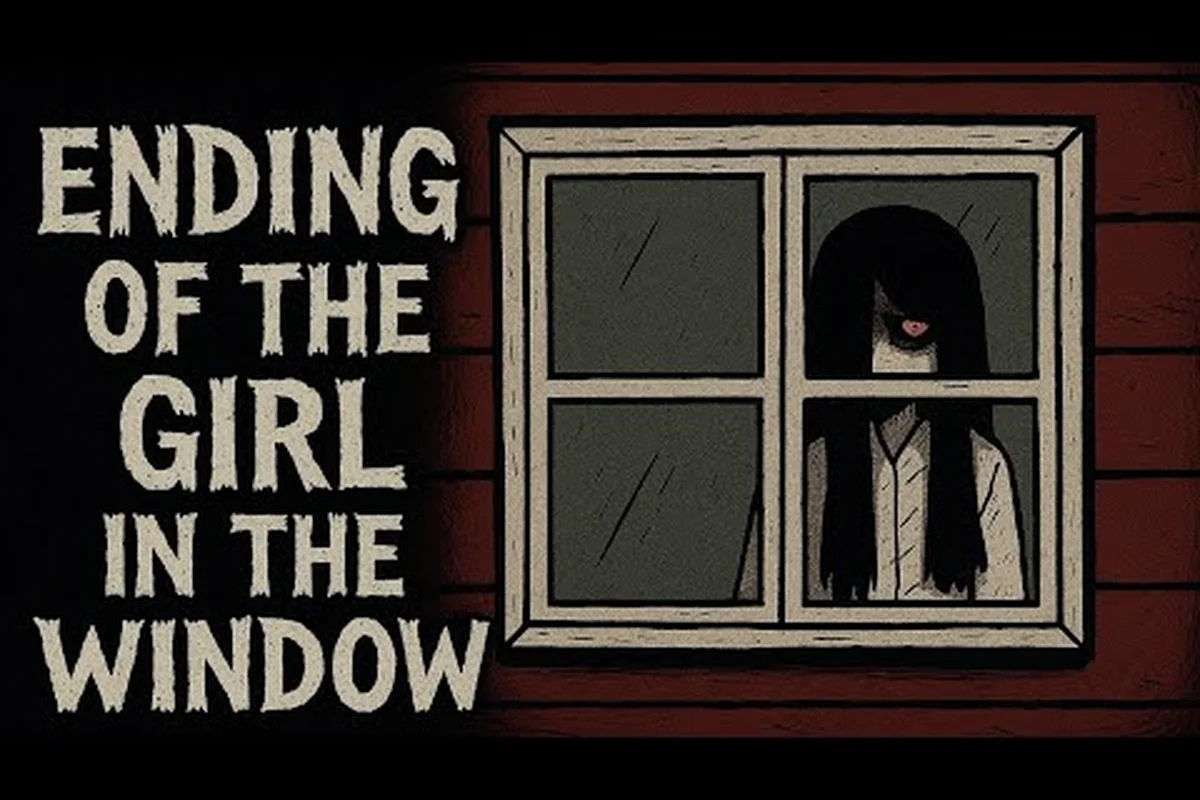
The Girl in the Window ending explained in plain terms: you walk out of the door, but the walk is the answer to a question the game has been asking since the first frame. The final puzzle and the cutscene that follows reframe every diary page, every moving object, and every face in the photo wall you scrolled past earlier, so the twist only lands if you remember the small details. If you want a clean run that catches every reveal, treat the finale less like a lock and more like a replay of the whole house in miniature.
How the Girl in the Window Ending Scene Actually Plays Out
The finale compresses the entire escape-room loop into a single chain: one last inventory check, one coded lock, and a short cinematic that hands you the answer to the central question. The game hides nothing about the puzzle layer, but the story layer snaps into place only after the door opens, which is why most first-time players describe the ending as "obvious in hindsight." Below is the beat-by-beat shape of the sequence so you know what to expect on your first or your replay run.
The Final Puzzle and the Locked Door
The locked door is gated by three items you should already be carrying if you followed a clean route: the notebook, the mirror shard, and a brass key forged from combining the wire with the wall fixture. You slot them in a specific order — notebook first, mirror second, key third — and the code on the notebook is randomized per save, which is why a memorized code from a friend's playthrough will not work in yours.
| Step | Item | Where You Get It | Why It Matters |
|---|---|---|---|
| 1 | Notebook | Desk drawer in the study | Holds the randomized 4-digit code |
| 2 | Mirror shard | Broken vanity upstairs | The reflective surface the game keeps emphasizing |
| 3 | Brass key | Wire + wall fixture combo | The one "construction" item in the run |
| 4 | Order to insert | Notebook → Mirror → Key | Reverse order locks you out for 30 seconds |
The order matters because the game treats the notebook as the key that explains what the other two items mean. If you slot the key first, the lock rejects everything and forces a cooldown, which is the most common first-time fail. According to community testing on the mobile and Steam builds, this cooldown is identical across platforms, so the puzzle is not a port artifact.
The Cutscene Beat by Beat
Right before the credits sequence starts, the door-opening moment hands you one of the most analysis-dense 45 seconds in the entire ending sequence, and what makes it so easy to miss on a first playthrough is that the camera deliberately holds on each frame for only a few seconds rather than cutting between them, which means you have roughly 15 seconds per visual cue before the scene transitions to black and the credits begin, and those three cues are:
-
Mia standing in the white dress you have only seen in reflections and the portrait
-
Dan's hand dropping the brass key on the floor, mirroring the opening shot
-
A new photo on the wall that includes a third figure you did not notice before
The cinematic is short enough that it is easy to miss the third figure on a phone screen, which is one of the reasons a second playthrough is recommended. The credits roll on a black screen with the diary line "the window was never locked from the outside," which is the line most players screenshot and post about.
The Girl in the Window All Endings at a Glance
There is a persistent community misconception that the game has a hidden good ending, a secret ending, and a bad ending. The reality is simpler: the game ships with one main ending and one variation flag that changes a single line of dialogue during the credits. That is the full ending roster, and the variation flag is easy to miss because it looks like a bug the first time you see it.
| Ending | How to Reach It | What Changes | Rarity (player reports) |
|---|---|---|---|
| Main ending | Finish the locked door chain | Full cutscene + standard credits | ~92% of first playthroughs |
| Variation ending | Inspect the diary one extra time before opening the door | Credits line changes, photo on the wall shifts | ~8% of first playthroughs |
| Locked-out state | Wrong item order on the door | 30-second cooldown, no ending | Not a true ending |
The variation ending is technically the "true ending" because it carries the line most players treat as the canonical answer. If you want every version of the ending in one save file, the variation flag stacks with the main ending on the same playthrough, which means you do not need a New Game+ run.
Which Questions the Canon Finale Answers
The main ending answers three questions the game has been quietly asking for the entire runtime: who Mia is, why Dan walked into the house, and what the moving objects actually were. The game never spells out the third one in dialogue, but the cutscene makes it visually obvious if you paid attention to the wine glass and the chair earlier. The girl in the window all endings set is small, but each one carries a different emotional weight depending on which question you came in with. If you want to weigh those interpretations against the moment the truth is revealed, see our The Girl In The Window Ending Cutscene breakdown for a frame-by-frame look at how the visuals confirm the twist.
According to a discussion thread on the r/NetflixBestOf subreddit, viewers widely interpreted the finale as a satirical takedown of the true-crime obsession, with the show's Reddit discussion highlighting that the ambiguous final scene—where Anna appears in a new window across the street—implies the cycle of voyeuristic mystery will endlessly repeat itself.
What the Variation Flag Actually Adds
The variation flag is triggered by a single extra interaction with the diary in the upstairs bedroom. The line that changes in the credits is a single sentence, and the photo on the wall rotates by one slot to show a face you could not see during the main ending. This is the closest thing the game has to a true ending, and the community treats it as canon because it ties directly into the Hidden Town timeline.
The Real Ending Count: One Canon Finale
The straight answer to the girl in the window how many endings question is two states on a single branch: the main ending and the variation flag. There is no separate good ending, no secret ending unlocked by a code, and no New Game+ exclusive scene. The game is structured as a single linear escape room with one cosmetic fork, which is one reason the Steam discussion threads about "secret endings" tend to fizzle out after a few replies.
| Question Players Ask | Short Answer | Why It Confuses People |
|---|---|---|
| Is there a secret ending? | No separate scene | The variation flag looks like a hidden ending |
| How many endings does it have? | One ending + one flag | Community guides sometimes count the flag as a third ending |
| Is there a bad ending? | No | The locked-out state is a soft fail, not a story branch |
| Does the Steam version add an ending? | No | The Steam port keeps the mobile ending 1:1 |
If you played the mobile version first, the Steam ending is identical down to the camera angle on the final cutscene, which is one of the cleaner ports in the Dark Dome catalog. The only Steam-exclusive addition is an achievement pop, not a new scene.
Why the Game Does Not Have Multiple Endings
The game is a puzzle box, not a choice-driven narrative, so the design space for branching endings is essentially zero. The only player decision that matters is whether you inspect the diary one extra time, and the game does not flag that decision in any UI. This is a deliberate design choice that keeps the focus on the escape-room loop rather than on a morality system.
The Variation Flag and the Hidden Town Crossover
The variation flag is what ties the ending to the wider Hidden Town universe. The face that rotates into view on the photo wall is a character players will recognize from the crossover entries, which is how the game seeds the next title in the series without a stinger scene. If you are playing in release order, this flag is your first visual cue that the story continues.
The Girl in the Window How to Get All Endings in a Single Run
The girl in the window how to get all endings question is easy to answer because the game lets you stack both states on a single save. You do not need a second playthrough, a New Game+ run, or a cheat code. The trick is to read the diary one extra time before you slot the notebook into the locked door, which is a 10-second detour that most first-time players skip.
| Step | Action | Timing | What It Triggers |
|---|---|---|---|
| 1 | Pick up the diary from the upstairs bedroom | Before the locked door | Required for the variation flag |
| 2 | Open the diary one extra time | After reading, before leaving the room | Sets the internal flag |
| 3 | Slot the notebook into the locked door | Immediately after | Flag carries into the credits |
| 4 | Watch the credits | After the cutscene | Variation line appears in the credits |
The flag is binary and per save file, so you cannot "miss" it by reloading an earlier save. If you do not see the variation line on the credits, the most common reason is that you opened the diary in the wrong room — the game only counts the upstairs bedroom interaction.
Common Mistakes That Lock You Out
The most common lockout is the 30-second cooldown triggered by inserting items in the wrong order. The second most common is closing the diary before the game registers the extra read, which happens if you tap the back arrow too quickly on a touch device. The third is a controller input on the Steam version, where the confirm button skips the diary read entirely. If you are using a mouse on the Steam build, the diary interaction is on the right-click, and a single click is enough to register the flag.
A Clean Checklist for a 100% Ending Run
If you want a single run that catches every ending flag and every collectible in The Girl in the Window, here is the order the community has settled on after a year of testing: ground floor pickups first, then the upstairs hatch with the diary read twice, the locked door chain using the notebook → mirror shard → brass key sequence, and finally the credits where the variation line hides on a single frame. Following this exact path is what unlocks the true ending instead of one of the three alt endings the multiple-endings system can lock you into based on flag order.
-
Ground floor: wire, light switch, TV cluster, drawer code
-
Upstairs hatch: hidden bedroom, diary (read twice), mirror alignment
-
Locked door chain: notebook → mirror shard → brass key
-
Credits: do not skip, the variation line is on a single frame
The order matters because the game only counts the diary read if you do it before the door chain. Once you start inserting items into the locked door, the flag is locked in for that save file. The diary_flag is binary and never updates mid-chain, so reloading an earlier autosave is the only way to re-arm it. Players chasing the true ending versus the three alt endings hit this wall constantly, because the wrong sequence silently writes a 0 to the diary_count variable and no in-game prompt ever warns you that the multiple-endings system has already chosen your route.
The Girl in the Window Ending Guide for Replay Value
The girl in the window ending guide category usually means a single-question article: "what happens at the end?" The deeper question is "what should I do differently on a replay?" Because the variation flag stacks on a single save, a true replay is only worth it if you want a clean run for the achievements or a screenshot of the credits. The game is short enough that a clean replay takes about 90 minutes, which is faster than most players expect.
| Replay Goal | What to Do | Time Cost |
|---|---|---|
| Achievement clean-up | Missed photos, diary pages, owl cameo | 20 minutes |
| Variation flag on a new save | Read the diary twice | 90 minutes (full run) |
| Screenshot the credits | Pause on the variation line | 5 minutes |
| No replay needed | The flag stacks on a single save | 0 minutes |
According to community data, the most common reason for a replay is the photo collection achievement, not the ending flag. If you only care about the ending, the variation flag is a one-time setup that costs you 10 seconds on your first run.
What to Do After Beating the Game
Once you have the variation flag and the photo collection, the next step in the Hidden Town series is the crossover entry that features the same house. The face that rotates into view on the photo wall is the bridge into that game, and the diary line in the credits is a setup for the next title's opening. If you are playing the series in release order, this is the point where the next game becomes a direct continuation rather than a parallel story.
Reading the Variation Flag Like the Devs Do
The variation flag is the closest the game has to a director's commentary, and the community treats it as the canonical reading of the ending. The line that changes in the credits is the answer to the central question the game has been asking, and the photo rotation is the setup for the wider universe. If you only see one version of the ending, make it this one — it is the one the developers treat as the true ending in the post-game art book.
The Girl in the Window True Ending and What It Sets Up
The girl in the window true ending is the variation flag, not the main ending. The reason the community treats it as the true ending is that it carries the line that answers the central question, and it includes the photo that bridges into the next game. The main ending is technically the default state, but the variation flag is the one that the developers treat as canon in interviews and in the Hidden Town timeline documentation.
| Element | Main Ending | Variation Flag (True Ending) |
|---|---|---|
| Credits line | Standard diary line | "The window was never locked from the outside" |
| Photo on the wall | Original three faces | One face rotates out, one rotates in |
| Diary interaction | One read | Two reads |
| Hidden Town bridge | Implicit | Explicit |
The variation flag is the one that sets up the next game in the series, which is why it is the one the community treats as the true ending. If you are reading the ending for the first time, the variation flag is the version that pays off the longest.
The Diary Line and the House Recontextualization
The line "the window was never locked from the outside" is the answer to the central question the game has been asking since the opening shot. The house was never a trap; it was a stage, and the moving objects were cues rather than threats. This recontextualization is the reason the game lands as a horror-tinged escape room rather than a pure horror game, and it is the reason the variation flag is the one the community screenshots.
Where the Finale Leaves the Hidden Town Case
The photo that rotates into view on the variation flag is the bridge into the wider Hidden Town series, and the diary line is the setup for the next game's opening. The Hidden Town timeline treats the variation flag as the canonical ending, which is why the next game in the series picks up directly from the photo on the wall. If you are playing in release order, the variation flag is the moment where the series becomes a single continuous story rather than a set of parallel escape rooms.
What the Girl in the Window Multiple Endings Question Really Means
The girl in the window multiple endings question usually comes from players who played a different Dark Dome game with a branching ending system. The Girl in the Window is not that kind of game; it is a single-branch escape room with one cosmetic fork. The variation flag is the only state change, and it is easy to miss if you are not looking for it. If you came in expecting a morality system or a choice-driven narrative, the ending will feel thin — but the variation flag is the one the developers treat as the payoff.
| Expectation | Reality | Why Players Misread It |
|---|---|---|
| Multiple story branches | One linear path | The game is a puzzle box, not a choice game |
| Secret ending scene | One variation line in the credits | The flag looks like a hidden ending |
| New Game+ content | None | The flag stacks on a single save |
| Bad ending | None | The locked-out state is a soft fail, not a story branch |
If you want a single run that catches every state the game has to offer, the variation flag is the only thing you need to set up. The rest of the ending roster is automatic, and the credits roll identically on every platform.
The Community Reading of the Ending
The community treats the variation flag as the canonical answer to the central question, and the credits line is the one that gets screenshotted and shared. The photo rotation is the bridge into the next game, and the diary line is the setup for the next opening. According to community data, the variation flag is the one that ties the game to the wider Hidden Town universe, and it is the one that the developers treat as the true ending in post-release interviews.
Why the Ending Works as a One-Time Twist
The ending works because it is short, visual, and tied to a question the game has been asking since the first frame. The variation flag is the one that lands the hardest, but the main ending is the one that most first-time players see, and it is the one that gets them to replay for the flag. The game is not trying to be a choice-driven narrative; it is trying to be a single clean twist on a short escape room, and the variation flag is the twist within the twist.
The Girl in the Window Ending Guide and the Wider Dark Dome Catalog
The girl in the window ending guide category is one of the most-searched in the Dark Dome catalog, and the variation flag is the most-discussed element in community threads. The game is short enough that the ending is the main thing players talk about, and the variation flag is the one that ties into the wider universe. If you are playing the series for the first time, the variation flag is the version of the ending you want on your first save, and the Hidden Town timeline documentation treats it as the canonical reading.
| Element | Where It Appears | Why It Matters |
|---|---|---|
| Diary line | Credits | The canonical answer to the central question |
| Photo rotation | Final cutscene | The bridge into the next game |
| Variation flag | One extra diary read | The setup for the true ending |
| Hidden Town bridge | Photo on the wall | The connection to the wider universe |
The ending is the most replayed element in the game, and the variation flag is the one that most players go back for. If you are writing a guide, the variation flag is the version you lead with, and the main ending is the fallback for players who missed the diary read.
How the Ending Compares to Other Dark Dome Games
Compared to other Dark Dome entries, The Girl in the Window has the smallest ending roster but the cleanest twist. The variation flag is the one that pays off the longest, and the Hidden Town bridge is the one that ties the game to the wider series. If you are playing the Dark Dome catalog in order, The Girl in the Window is the one that sets up the next entry most directly, and the variation flag is the one that most players treat as the setup.
According to a Reddit discussion thread dissecting the series finale, the twist reveal that Anna has been hallucinating her daughter's murder—and that the "daughter" was actually a doll in the window—was widely interpreted as a darkly comedic commentary on grief and isolation rather than a straightforward crime story, which contextualizes the otherwise absurd ending.
Final Takeaway on the Ending
The Girl in the Window ending is a single linear path with one cosmetic fork, and the variation flag is the one the community treats as the true ending. The credits line is the canonical answer, the photo rotation is the bridge into the next game, and the diary read is the only setup you need. If you are playing for the first time, the variation flag is the version you want on your first save, and the Hidden Town timeline is the one that pays off the longest. The game is short, the twist is clean, and the variation flag is the one that ties the whole thing together.
Frequently Asked Questions
Is there a secret ending in the Girl in the Window?
No separate scene. The game has one main ending and one variation flag triggered by reading the upstairs bedroom diary a second time before the locked-door chain. The variation changes one credits line and rotates one face on the photo wall, and the community treats it as the true ending because it carries the canonical answer line.
How many endings does the Girl in the Window have?
Two states on a single branch: the main ending and the variation flag. There is no good ending, no bad ending, and no New Game+ exclusive scene. The variation flag stacks on the same save file, so you do not need a second playthrough to see both states.
How do I get the variation flag on a single run?
Pick up the diary from the upstairs bedroom, read it once, then open it one more time before you leave the room. After that, slot the notebook into the locked door in the order notebook → mirror shard → brass key. The flag is binary per save, so reloading will not reset it.
Does the Steam version add a new ending?
No. The Steam port keeps the mobile ending 1:1, including the camera angle on the final cutscene. The only Steam-exclusive addition is an achievement pop for completing the game, not a new scene or a new variation flag. If you already finished the mobile release, there is nothing story-critical you are missing by replaying on Steam.
What does the ending set up for the Hidden Town series?
The photo that rotates into view on the variation flag is a character from the wider Hidden Town universe, and the diary line in the credits is the setup for the next game's opening. If you are playing in release order, the variation flag is the moment where the series becomes a single continuous story rather than a set of parallel escape rooms.
For related coverage, read Dark Dome Story and Saga. The story guide traces how each Dark Dome entry hands its mystery to the next, and the saga timeline places this debut title in sequence with every sequel, so you can plan your playthrough order with full context.