
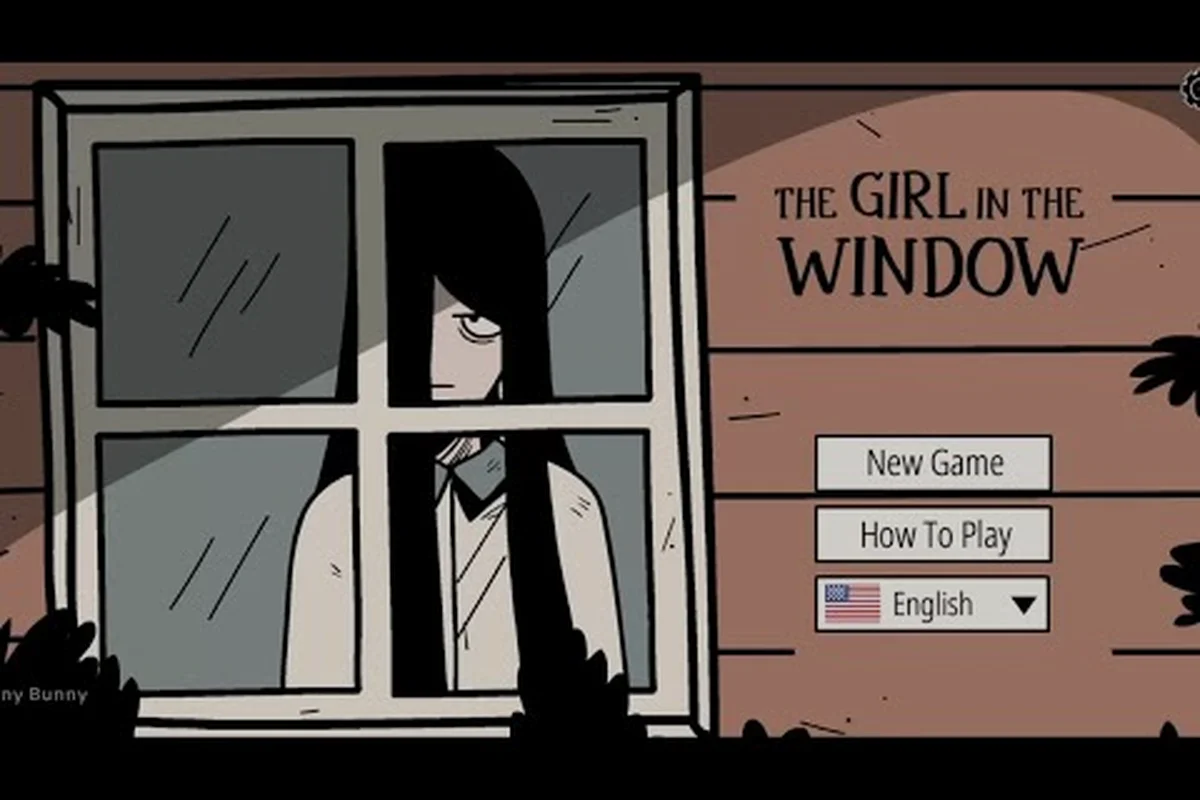
The Girl in the Window mobile version is the original release that launched the entire Hidden Town saga, and it has now cleared 10 million downloads on Google Play while holding a community-tracked 4.75-star average rating across both storefronts. Before the Steam port, this point-and-click escape room was a touch-only experience built for phones and tablets, and that design DNA still shapes how the game feels today. Understanding the mobile original matters because every later version — including the 2026 Steam release — is a layer built on top of it.
What the Mobile Original Actually Is
The Girl in the Window started life as a free-to-play mobile escape room from the Peruvian studio Dark Dome. Players take the role of Dan, who wakes up locked inside an abandoned house and has to combine items, solve randomized number and symbol puzzles, and read a silent environment to escape. The mobile build established the template that the rest of the Hidden Town series would follow.
Core Specs at Launch
| Attribute | Mobile Original (2019) |
|---|---|
| Developer | Dark Dome Studios |
| Price Model | Free with ads, optional ad-free purchase |
| Engine | Air (Adobe AIR runtime) |
| Input Method | Touch only (no keyboard/mouse) |
| Save System | Single-slot local save |
| Hint System | Built-in, unlimited uses |
| Original Languages | English |
The mobile build shipped with English only, which is one of the biggest reasons the later language updates mattered so much to the international player base. The official Google Play listing still describes the game as the first entry in a darker, more interconnected universe than the 2019 release suggested.
Why the Mobile Version Became the Reference Build
Because the game was designed for touch screens first, the puzzle interactions, tap-to-zoom inspection, and inventory drag-and-drop were all tuned for thumbs rather than cursors. That decision shaped three lasting design pillars:
-
Tap-targeted hotspots that feel natural on a 6-inch screen
-
Generous hint timers that let players leave and return without losing state
-
Randomized codes per save that keep replays from feeling memorized
These mechanics were not retrofitted from a PC design — they were the design. The Steam version, by contrast, has to add keyboard, mouse, and controller support on top of a touch-first foundation, which is part of why the Steam port feels different in pacing and feedback.
Android vs iOS: What the Stores Show
The Girl in the Window Android edition and the iOS edition share the same core build, but the two storefronts present them differently. Ratings, file size, and update cadence diverge because each platform runs a separate APK and IPA pipeline.
Storefront Comparison
| Feature | Google Play (Android) | App Store (iOS) |
|---|---|---|
| Average Rating | ~4.75 stars (10M+ downloads) | ~4.7 stars (community-tracked) |
| Minimum OS | Android 6.0+ | iOS 11+ |
| File Size | ~70–90 MB | ~90–110 MB |
| Ad Format | Interstitial + rewarded | Interstitial + rewarded |
| Ad-Free Unlock | One-time IAP | One-time IAP |
| In-App Purchases | Tip jar + ad removal | Tip jar + ad removal |
| Update Cadence | Frequent (every few months) | Matches Android after approval |
The most striking data point is the 10M+ download count on Android alone. The Girl in the Window mobile game hit that milestone before the Steam port existed, which is one of the clearest signals that the original touch version still carries the largest active player base. The uptodown mirror corroborates the Android 6.0+ baseline and confirms the APK has been re-uploaded consistently across the game's life.
iOS-Specific Quirks
iOS players occasionally report save-migration friction when moving between devices, because the iOS build stores progress in the app sandbox rather than the cloud. The Android version, by contrast, can rely on Google's backup service to restore save data on a new device. Both versions share the same item combinations and puzzle logic, so the underlying experience is identical — only the surrounding plumbing differs.
The 10 Million Download Milestone
Reaching 10M downloads on Google Play is a meaningful threshold for an indie point-and-click, especially one without a marketing budget. The number is reported by the store itself and confirmed by community trackers, and it gives the mobile original a stronger footprint than most of its peer escape room games.
Milestone Timeline
| Period | Milestone | Notes |
|---|---|---|
| 2019 | Initial release | English only, free with ads |
| 2020 | First 1M downloads | Word-of-mouth on TikTok and YouTube |
| 2022 | 5M+ downloads | Spanish and Portuguese added |
| 2023 | Japanese added | First Asian language in the series |
| 2024–2025 | Performance and battery updates | Lighter APK, smoother frame rate |
| 2026 | 10M+ downloads | Same week as the Steam release window |
The 10M figure matters because it sets a clear expectation for the Steam launch: the audience already exists on mobile, and the PC port is mostly a way to serve that same audience on desktop. This is also why the Hidden Town universe chronology stays consistent between platforms — the mobile original is the canonical first entry, and every later game refers back to it.
What the 4.75-Star Rating Actually Reflects
A 4.75 average on a free mobile game is high. It signals that players tolerate the ads and the occasional IAP prompt because the puzzles, art, and atmosphere hold up. Reviewers consistently mention the silent storytelling, the hand-drawn 2D art, and the satisfaction of solving the randomized number puzzles without a walkthrough. The most common complaint, by contrast, is the ad frequency — a problem the ad-free IAP directly addresses.
Languages: How the Mobile Build Expanded
The Girl in the Window started life as an English-only release, but the mobile versions went on to add Spanish, Portuguese, and Japanese, plus several others. Language coverage is one of the strongest quality-of-life differences between the original 2019 build and the 2026 mobile version most players run today.
Current Language Coverage (Mobile)
| Language | Added | Notes |
|---|---|---|
| English | 2019 | Original launch language |
| Spanish | 2022 update | First non-English localization |
| Portuguese | 2022 update | Brazilian and European variants |
| Japanese | 2023 update | First Asian localization |
| German | 2024 update | Community-requested |
| French | 2024 update | Community-requested |
| Italian | 2025 update | Community-requested |
The Girl in the Window spanish, portuguese, and japanese localizations are the three that most changed the audience profile for the series. Spanish in particular opened the Latin American market, where Dark Dome already had a strong following from its earlier work. Portuguese followed almost immediately because the Brazilian community overlapped heavily with the Spanish-speaking one. Japanese was the harder lift, because the text density in the puzzles and diary pages required careful translation rather than machine output.
What the Languages Update Changed in Practice
The language update on mobile did not just translate the UI strings. It also re-rendered the puzzle symbols so they read naturally in the target language, which is a non-trivial job for a game whose puzzles depend on letter-to-number mappings. According to community reports, the japanese port required re-balancing the symbol puzzles because the character set is denser, and several diary pages had to be re-typeset to fit longer localized strings. The Girl in the window spanish version, by contrast, slotted in cleanly because Spanish shares enough Latin-script logic with English to keep the puzzle math intact.
Players who want a deeper breakdown of how those localizations landed in practice can check the version history and language update notes, which track the exact patches that added each language.
Mobile vs Steam: Where the Two Builds Diverge
The Girl in the Window mobile and Steam versions share the same story, the same puzzles, and the same Hidden Town canon, but the two builds feel different in the hand. Some of the divergence is intentional, and some is a side effect of porting a touch-first design to keyboard, mouse, and controller.
Side-by-Side Build Comparison
| Aspect | Mobile Original | Steam Port (2026) |
|---|---|---|
| Input | Touch only | Keyboard, mouse, controller, Steam Deck verified |
| Resolution | Native phone resolution (up to 1080p) | Up to 4K |
| Frame Rate | 30–60 FPS (device-dependent) | 60 FPS target |
| Languages | 7+ languages | Subset; English primary at launch |
| Cloud Saves | Platform-dependent (iCloud / Google Backup) | Steam Cloud |
| Achievements | None | Full Steam achievements list |
| Price | Free with ads | Paid (¥15 region-priced, $5.99 USD baseline) |
| Bundle Options | Standalone | Dark Dome Collection bundle available |
The most user-visible difference is the input model. Players coming from mobile expect to tap to inspect, drag to combine, and pinch to zoom. The Steam port has to map all of that to mouse hover, drag-and-drop, and a scroll wheel, which is a different feel even when the underlying logic is identical. The full mobile vs Steam differences guide goes deeper into how the puzzle feedback loops were retuned for desktop.
Why the Mobile Version Still Matters in 2026
Even with the Steam release live, the mobile original is still the most-played version. Free-to-play on Android has a lower barrier to entry than any paid PC game, and the ad-supported model lets curious players try the entire first episode without paying anything. For a long-tail series like Hidden Town, the mobile version is also the on-ramp: new players discover Dan and Mia on their phones, then move to the Steam bundle to play the rest of the saga with achievements and Steam Cloud.
Playing Solo on Mobile: What to Expect
The Girl in the Window mobile game is a strictly single-player experience — there is no co-op, no asynchronous multiplayer, and no online requirement. Every save lives on the device, every hint is generated locally, and every puzzle is solved by one player in one room. That simplicity is part of why the game ages well.
Solo Session Tips That Travel Across Platforms
-
Save before every randomized code so a wrong guess does not lock you out of momentum
-
Use the hint system as a pacing tool rather than a crutch — wait until you have actually tried the puzzle
-
Keep a manual notes tab open on your phone for symbol-to-number mappings
-
Play in landscape orientation if your device supports it; the wider view reveals more hotspot detail
-
Disable notifications for the first run so a popup does not interrupt a code entry
These tips apply equally to the first-time beginner run and to veterans replaying the game on a new device. The single-player model also means the game is fully playable offline once installed, which is a meaningful plus for travel or low-signal environments.
What the Solo Save System Actually Does
The mobile save system writes a single slot to local storage. There is no save scumming beyond that one slot, and there is no manual save button — the game checkpoints automatically after each solved puzzle. The Steam version, by contrast, supports Steam Cloud and unlimited manual saves, which is one of the cleanest quality-of-life upgrades for players who want to experiment with multiple endings.
Frequently Asked Questions
Is the girl in the window mobile game still updated in 2026?
Yes. The mobile versions still receive patches roughly every few months, mostly for performance, language additions, and small bug fixes. The most recent rounds added Italian and refined the battery profile on Android. The mobile update history tracks the patch-by-patch changes for anyone who wants the full list.
Does the girl in the window android version cost anything?
The base game is free on Google Play, supported by interstitials and rewarded ads. A one-time IAP removes ads entirely and unlocks a tip-jar style donation. The iOS version follows the same model on the App Store, with the same optional ad-free purchase.
What languages does the girl in the window mobile support now?
The current mobile build supports English, the girl in the window spanish localization, the girl in the window portuguese localization, the girl in the window japanese localization, plus German, French, and Italian added in successive updates. Coverage can vary slightly between iOS and Android, but the core seven languages are present on both.
Can I move my mobile save to the Steam version?
Not directly. The mobile save lives in the app sandbox or in platform backup, and the Steam version uses its own save slot. The story is the same, but you will replay the puzzles rather than carry progress over. Cloud sync between the two builds is not currently supported.
Is the mobile version different from the Steam port?
Yes. The mobile original is touch-only, free, and ad-supported, with seven-plus languages and a single local save. The Steam port is paid, supports keyboard, mouse, controller, and Steam Deck, adds Steam achievements, and runs at higher resolution and frame rate. The story and puzzles are identical, but the feel of the controls and the surrounding feature set diverge.