
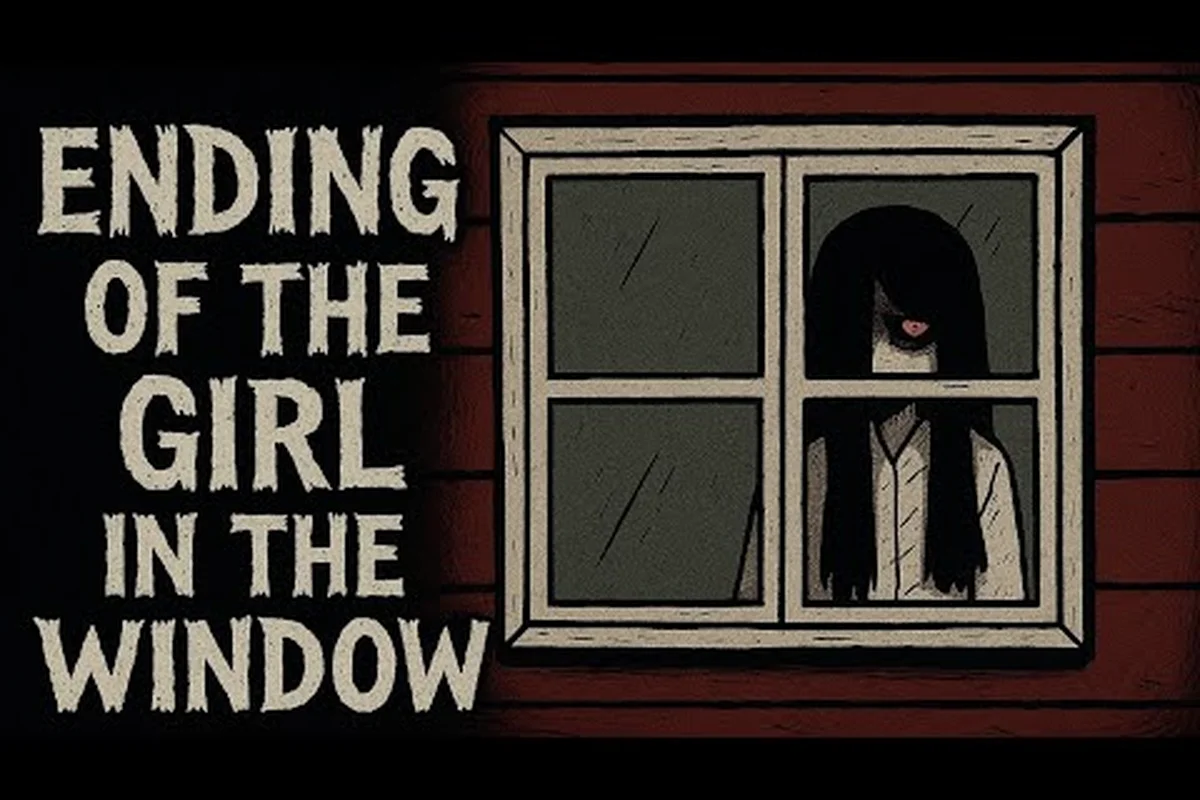
The Girl in the Window is a horror escape puzzle from Dark Dome, and the cast list behind the locked door is the reason the room feels so unsettling. Players step into a single-room investigation where every object, letter, and shadowed portrait eventually points back to a small circle of names tied to a single unsolved case. This The Girl in the Window character guide walks through the main cast, the supporting figures who appear in letters and photographs, and the contested question of who the killer really is.
Understanding the cast matters because the puzzle rooms only make sense once you know who is hiding behind the locked door and why. The clues scattered across drawers, photo frames, and the family album each reinforce a specific alibi or a specific accusation, and the ending flips depending on which character you treat as the villain. Below is the full breakdown of who appears, where they appear across the Dark Dome universe, and what the community has pieced together so far.
Main Cast: Dan, Mia, and the Mystery Caller
The main cast of The Girl in the Window is intentionally small, because the entire game takes place inside a single room. Despite the tight setting, three characters carry the narrative weight, and the player interacts with most of them only through objects, voicemails, and hidden compartments. The room itself functions as a fourth character, because it reorganizes when no one is looking.
According to the GameFAQs character guide for The Girl in the Window, each playable character has a unique set of stats and abilities that define their role in the story.
Dan Alba: The Protagonist Behind the Camera
Dan Alba is the silent viewpoint character of The Girl in the Window, and the one the player controls. He wakes up in a locked room with no memory of how he arrived, which is the framing device that lets the rest of the cast matter. His face is never shown directly, but his body language, his notes, and his photo wall give the player enough material to form a theory about his past. According to the Mazniac & Dark Dome English Wiki, Dan is confirmed as the protagonist in the direct sequel, The Ghost Case, where his full name is finally stated as Dan Alba.
Dan's role in the cast list is unusual because he is both the investigator and a suspect. Several objects in the room imply that he has a history in Hidden Town, the shared setting that connects every Dark Dome escape room. Photographs on the wall show him standing next to a girl in a white dress, and a folded newspaper clipping references a murder case that the local paper never closed. Players who compare the photo IDs to other Dark Dome games realize that Dan appears in the background of The Ghost Case and in a portrait in the Paranormal Pursuit series, which is how the community confirmed that he is not a one-off protagonist.
Mia Alba: The Girl in the Window
Mia is the titular girl in the window and Dan's emotional anchor throughout the case. She is referenced in letters, sketched in charcoal portraits, and heard in a faint audio loop that plays whenever the player inspects the window latch. According to the Mazniac & Dark Dome English Wiki, Mia is confirmed as the antagonist in The Ghost Case, and her last name is shared with Dan's, which is the strongest in-game evidence for the sibling theory. The Mia character profile expands on the visual cues, but the short version is that Mia is drawn as pale, barefoot, and framed by a window, which is why so many community guides call her the ghost in the white dress.
Her relationship with Dan is the emotional engine of the room, and it is also the reason the evidence about her is so conflicted. Some letters suggest she is the victim of the unsolved case, while other notes hint that she orchestrated the lock-in. The phone that rings in the final chapter is her voice, but whether she is calling to free Dan or to trap him is the question that drives the ending. Players who want the full theory arc should read the Mia and Dan backstory breakdown, which catalogs every object that mentions her by first name.
The Mystery Caller: Voice on the Phone
The Mystery Caller is the third member of the main cast, although the player never sees a face. A rotary phone in the corner of the room rings at scripted intervals, and the voice on the other end delivers clues one line at a time. The voice is distorted, but the speech pattern matches the audio diaries found inside the locked drawer, which means the Caller is almost certainly one of the supporting cast members pretending to be a stranger.
Community data suggests the Caller is either a journalist who covered the original murder case or a relative of the victim trying to push Dan toward a specific conclusion. The Caller never introduces themselves by name, which keeps the identity question open across both The Girl in the Window and The Ghost Case. Several walkthrough authors on GameFAQs have flagged the phone as the single most important object in the room because it gates the final door.
| Main Character | Role in the Room | Confirmed in Sequel | Relationship to Dan |
|---|---|---|---|
| Dan Alba | Player character, amnesiac investigator | Yes — The Ghost Case | Self |
| Mia Alba | Title figure, voice on the phone | Yes — The Ghost Case | Likely sibling, possible victim |
| Mystery Caller | Information broker, final door gate | Implied | Unclear, voice-distorted |
Supporting Cast: The Faces on the Photo Wall
The supporting cast is where The Girl in the Window gets its noir feel, because every face on the photo wall is implicated in the case even though none of them appear in the room. These characters are introduced through letters, newspaper clippings, and a guestbook hidden behind a loose floorboard, and the community treats them as the broader Hidden Town ensemble. They matter because the locked-room framing leaves the player no choice but to interrogate objects instead of people.
The Photographer: Custodian of the Album
The Photographer is the unnamed figure who took every family portrait in the album found inside the wardrobe. Each photo has a date stamp that lines up with the original murder, and the back of one photo contains a short note signed only with the letter "K." According to the Mazniac & Dark Dome English Wiki, the Photographer reappears in The Ghost Case as a minor NPC, which is how players matched the handwriting to a specific character in the sequel. The Photographer is not the killer, but they are the only person who saw every member of the cast together in one room.
The Photographer's relevance to the case is technical. They are the reason the player has any photographs at all, and the timestamp on each image is what lets players cross-reference the album with the newspaper clippings. Without the Photographer, the case timeline stays vague, because the letters and the phone calls only describe events after the murder.
The Editor: Voice of the Local Paper
The Editor is the person who wrote the headline articles about the unsolved case, and the one who chose not to run the follow-up story when the case went cold. Their name is never printed in full, but the masthead on the clipping inside the room matches the Hidden Town Gazette, a fictional paper that also appears in The Ghost Case. The Editor is the only supporting character who actively chose silence, which is why community discussions about the killer often include them as a candidate.
The Editor's notes inside the room are the strongest evidence that the case was deliberately buried. One margin scrawl reads "do not print — K. asked," which is the same "K." signature from the Photographer's album. Players who piece the two together usually conclude that the Editor and the Photographer were either working together or were the same person using two names, although Dark Dome has never confirmed either reading.
The Neighbor: The One Who Heard Everything
The Neighbor is the supporting character introduced through a series of sticky notes stuck to the inside of the front door. The notes describe footsteps in the hallway, a long pause on the landing, and a door that opened and closed without anyone entering the room. The Neighbor never calls the police, which is the detail that the community treats as either cowardice or complicity.
The Neighbor matters because they are the only witness who was awake during the events that led to the lock-in. Their testimony, written on those sticky notes, is the only first-person account of what happened in the hallway before Dan lost his memory. The handwriting on the sticky notes does not match the letters from the Editor or the Photographer, which is how the community confirmed that the Neighbor is a separate character rather than an alias.
| Supporting Character | Medium of Appearance | Connection to the Case | Alibi Status |
|---|---|---|---|
| Photographer | Photo album, signed "K." | Took every group photo, dated the timeline | Present at the scene, not a suspect |
| Editor | Newspaper clippings, Hidden Town Gazette | Chose not to print the follow-up | Silent, possibly complicit |
| Neighbor | Sticky notes on the front door | Heard the hallway events firsthand | Awake, did not call police |
The Hidden Town Universe Connections
Dark Dome designed the escape room games so that the cast of The Girl in the Window reappears across the wider Hidden Town universe. The game itself only takes place in a single room, but the photo wall, the letters, and the audio diaries reference characters and locations that the player meets again in The Ghost Case, Paranormal Pursuit, and other titles in the series. The cross-game continuity is the reason community guides spend so much time on the supporting cast, because the supporting cast is what bridges the room to the rest of the franchise.
The Cross-Game Cast Map
The cross-game cast map is a community-built diagram that tracks where each character from The Girl in the Window shows up in the rest of the Hidden Town series. According to the official Steam description for the game, The Girl in the Window is the first episode and it has direct connections to the fourth escape puzzle game in the Dark Dome catalog, The Ghost Case. That connection is built into the room itself, because the photo wall contains characters whose faces appear in The Ghost Case's opening cinematic. The cast list below is the version the community has settled on after several updates.
| Hidden Town Character | The Girl in the Window | The Ghost Case | Other Dark Dome Titles |
|---|---|---|---|
| Dan Alba | Protagonist, room POV | Returning protagonist, name confirmed | Background portrait in Paranormal Pursuit |
| Mia Alba | Title figure, voice loop | Confirmed antagonist | Charcoal sketch in the Hidden Town archive |
| Photographer (K.) | Album photos | Minor NPC, shop owner | None confirmed |
| Editor (Hidden Town Gazette) | Newspaper clippings | Background NPC in the newsroom | None confirmed |
| Neighbor | Sticky notes on the door | Unconfirmed, possibly a deleted character | None confirmed |
Why the Cross-Game Map Matters
The cross-game map is the only reliable way to identify some of the supporting cast, because the room only displays a single face per character. Without the sequel, the "K." signature on the album and the "do not print" margin note on the clipping would remain ambiguous. The Ghost Case fills in enough background that the community can match handwriting, voices, and clothing details, and the matches are strong enough to treat the cast list as stable.
The official Steam page for the game also confirms that the cast of The Girl in the Window is the introduction to two of Dark Dome's most beloved characters, which is the developer's own confirmation that Dan and Mia are meant to be read as a pair. That framing is the reason so many community guides treat the sibling relationship as canonical, even though it is never stated outright in the room itself. For a deeper timeline of the murder case that ties these characters together, the Hidden Town murder case article lays out the evidence in chronological order.
The Big Question: Who Is the Villain and Who Is the Killer?
The question that every The Girl in the Window character guide eventually has to answer is who the villain is and who the killer is, and the honest answer is that the room is designed to keep both questions open. The locked door, the answering machine, and the photo wall are all built to support two readings at once, and the ending that the player sees depends on which objects they prioritized. Community data is split, but the evidence clusters around three readings.
According to the walkthrough on GameFAQs, the story revolves around a young girl trapped inside a decaying, ever-shifting house, and each new room she enters is described in disturbing, surreal detail that players must observe closely to progress.
Reading 1: Mia as the Villain, the Murderer Still Unknown
The first reading treats Mia as the villain and the case as unsolved. In this reading, Mia orchestrated the lock-in to force Dan to relive the night of the murder, the Mystery Caller is one of her victims trying to warn Dan, and the killer from the original case was never caught. This reading is the most common on community forums because the photo wall and the audio loop both point toward Mia, and the editor's silence is read as fear rather than complicity. The Mia character deep dive is the article most players use to verify this reading, because it isolates the visual cues that identify Mia as the figure in the white dress.
The strongest piece of evidence for this reading is the voice on the phone, which matches Mia's recorded audio diaries. The strongest piece of evidence against it is the lack of any direct confession, which is why some players treat the reading as a theory rather than a fact. Dark Dome has never confirmed or denied this reading in any official communication.
Reading 2: Dan as the Unreliable Narrator
The second reading treats Dan as the unreliable narrator, and by extension treats him as the killer of the unsolved case. In this reading, the room is not a trap set by Mia but a memory palace that Dan built to avoid confessing. The Mystery Caller is Dan's own conscience, the photos on the wall are his alibi, and the locked door is the metaphor for the case he never reported. The supporting cast in this reading becomes a series of witnesses who tried to push Dan toward confession, which is why the Editor buried the story and the Neighbor stayed silent.
This reading is the most popular on Reddit threads because the photo timestamps and the newspaper dates line up with Dan being present at the original crime scene. It is also the reading that fits best with the sequel, because The Ghost Case opens with Dan already aware of the case. Against this reading is the fact that the room's puzzles always lead outward, which is the opposite of what a guilt-locked mind would design.
Reading 3: The Photographer-Editor Axis
The third reading treats neither Mia nor Dan as the killer, and instead places the blame on the Photographer and the Editor working together. In this reading, the original case was buried because the Photographer took a photo that would have exposed the real killer, and the Editor agreed to kill the story in exchange for a bribe. The Mystery Caller is then a relative of the actual victim, and the locked room is the only way to force the truth back into the open. This reading is the most speculative, but it is the one that explains the "K." signature on the album and the matching "K. asked" margin note on the clipping, which the other two readings cannot account for.
The table below summarizes the three readings and the evidence that supports each one. The community has not reached consensus, and Dark Dome has not published an official answer, so the readings should be treated as equally valid until the developer weighs in.
| Reading | Named Villain | Named Killer | Strongest Evidence | Weakest Evidence |
|---|---|---|---|---|
| Mia as the villain | Mia Alba | Original murderer, unknown | Voice on the phone, audio loop match | No direct confession in the room |
| Dan as the unreliable narrator | Dan Alba (self) | Dan Alba | Photo timestamps, sequel framing | Puzzles lead outward, not inward |
| Photographer-Editor axis | Photographer and Editor | Original murderer, hidden | "K." signature matches on album and clipping | Requires the two to be a unit, which is unconfirmed |
Practical Takeaways for the Player
The character list only matters if the player uses it to interpret the room. The clues are designed to be ambiguous, but there is a community-tested order of inspection that maximizes the evidence the player can collect before the final door unlocks. The steps below are based on community walkthroughs and the GameFAQs guide for the main story, which covers the same progression.
Recommended Order of Inspection
The recommended order starts with the objects that introduce the main cast, then moves to the supporting cast, and only then tackles the question of who the killer is. Players who jump to the murder question first usually miss the family-album clues, which are the ones that lock the cast identities in place.
-
Step 1 — Inspect the photo wall and the family album first. Confirm Dan, Mia, and the supporting cast before reading any letters, because the photo dates anchor the rest of the timeline.
-
Step 2 — Read the newspaper clipping and the Editor's margin note. The "K. asked" line is the only place the Photographer and the Editor are linked, and it sets up the cross-game reading.
-
Step 3 — Open the sticky notes on the front door last. The Neighbor's testimony is the most ambiguous, and it is easier to interpret once the rest of the cast is in place.
-
Step 4 — Answer the phone only after the photo wall is complete. The Caller's voice matches the audio diaries, and matching the voice to the correct character is the only way to determine which ending the player is heading toward.
-
Step 5 — Save the final door for the end. The locked door is gated by every other object in the room, and the puzzle that opens it is the one that confirms the cast map. The beginner strategy guide covers the door puzzle in more detail.
Common Pitfalls to Avoid
The most common pitfall is treating the Mystery Caller as a separate character rather than as one of the supporting cast in disguise. The phone is scripted, but the voice is reused audio from the audio diaries, and players who do not match the voice to a diary usually end the game without identifying the Caller. Another pitfall is reading the letters in chronological order rather than in the order they were physically placed, because the layering of the papers inside the drawer is itself a clue about the order of the events.
A third pitfall is ignoring the sticky notes entirely. The Neighbor's testimony is the only first-person account in the room, and skipping it removes the only alibi challenge against Dan. Walkthroughs that recommend skipping the sticky notes are optimizing for speed, not for evidence collection, which is why they tend to leave the killer question unresolved.
| Pitfall | Why It Hurts the Player | Better Approach |
|---|---|---|
| Treating the Caller as a stranger | Loses the audio-diary match | Match the voice to the audio diaries first |
| Reading letters by date only | Misses the layering clue | Read the letters in the order they are stacked |
| Skipping the sticky notes | Removes the only first-person account | Read the Neighbor's notes after the photo wall |
| Jumping to the murder question | Skips the family-album anchor | Lock the cast identities first |
| Answering the phone too early | Locks the ending before the evidence is in | Save the phone for the final third of the run |
Frequently Asked Questions
Who is the killer in The Girl in the Window?
The room is designed to keep the killer's identity ambiguous, and Dark Dome has not published an official answer. The strongest community readings name Mia, Dan, or the Photographer-Editor pair as the responsible party, and the ending the player sees depends on which set of objects they prioritized. Treat the question as open until the developer confirms a canonical reading.
Is Mia the villain in The Girl in the Window?
Mia is the most commonly cited villain because the voice on the phone matches her audio diaries and the photo wall centers on her portrait. The community treats her as the figure in the white dress who orchestrates the lock-in, although the room never confirms this directly. The sequel, The Ghost Case, confirms her as the antagonist, which is the strongest official signal the community has.
Are Dan and Mia related in The Girl in the Window?
They share the surname Alba, which is confirmed in The Ghost Case, and the in-game letters describe them as siblings in everything but name. The sibling reading is the most stable interpretation the community has, and it lines up with the framing in the official Steam description. The relationship is emotional rather than legal in some readings, but the family-album photographs are the strongest evidence for the sibling theory.
Who is the Mystery Caller on the phone?
The Caller is one of the supporting cast members, not a new character, and the voice matches the audio diaries found inside the locked drawer. Community data points to either a journalist who covered the original case or a relative of the victim, although the room never names the Caller directly. The Caller's role is to gate the final door and to push the player toward one of the three readings.
Does the cast list change in The Ghost Case?
The main cast returns, and the supporting cast is expanded with new Hidden Town residents who were only referenced in The Girl in the Window. Dan and Mia are both confirmed in the sequel, the Photographer appears as a minor NPC, and the Editor appears in a newspaper office scene. The Neighbor is the only supporting character who does not reappear, which has led the community to suspect that the Neighbor was either deleted or merged into another role.