
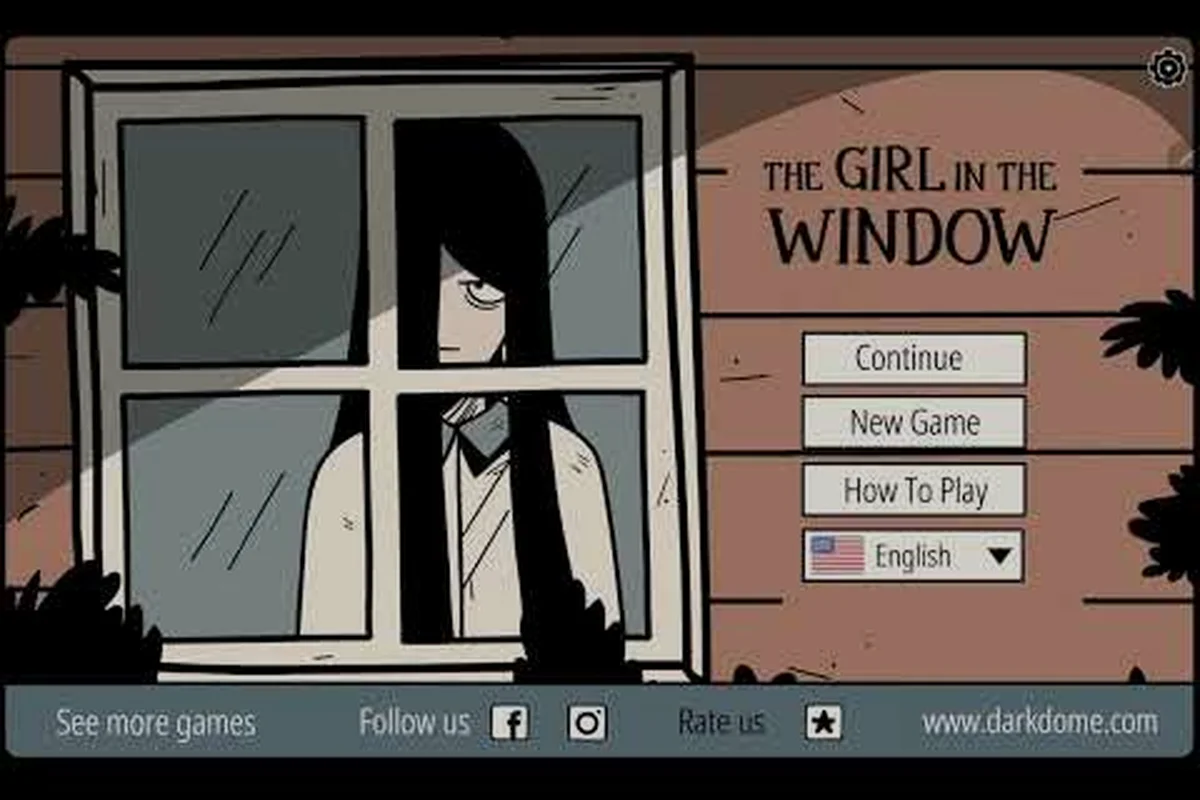
the girl in the window Mia is the single most debated figure in Dark Dome's Hidden Town universe, and the puzzle-dense opening chapter uses her to anchor every jump scare, clue, and twist. Players walk into the abandoned house with Dan, notice a pale girl in a white dress behind the upstairs window, and spend the rest of the runtime asking the same question: is she a vampire, a ghost, a villain, or the real victim? This guide breaks down the in-game evidence, decodes the portrait, the crucifix, and the diary trail, and lays out the three leading community theories about who the girl in the window actually is.
The Girl in the Window Mia: First Sightings and Core Identity
The girl in the window appears before Dan ever solves a puzzle. Within the first few minutes of play, the white-dress girl is visible through the upper window of the abandoned house, sometimes alone, sometimes accompanied by the vampire portrait that hangs in the hallway. That opening is not decoration; it is the central hook the rest of the chapter keeps circling back to.
According to the official description on The Girl in the Window on Steam, the game introduces Dan and Mia as two of Dark Dome's "most beloved characters from the Hidden Town universe." That wording is deliberate: the developer treats Mia as a co-protagonist rather than a side character, even though the player only ever controls Dan.
What the game calls her and what the community calls her
Across fan threads and wiki entries, you will see at least four labels for the same figure: "the girl in the window," "Mia," "the white-dress girl," and "the vampire girl." They all point to the same on-screen character, but each label highlights a different theory.
| Label | Where it shows up | What it implies |
|---|---|---|
| The girl in the window | Diary pages, photo captions | The literal figure seen through the upstairs window |
| Mia | Steam description, crossover cameos | Her canonical name within the Hidden Town lore |
| The white-dress girl | Walkthroughs, YouTube retrospectives | Her visual signature, used by puzzle guides |
| The vampire girl | Community theories, portrait discussions | Ties her to the vampire portrait puzzle chain |
The shared label "the girl in the window" is the one the player will see most often in the diary and photo evidence, while "Mia" is the canonical name that the wider Hidden Town saga uses when she returns in later Dark Dome games.
The three roles players argue about
A quick scroll through community discussions turns up three competing readings of the girl in the window Mia — vampire, villain, or victim — and each framing shifts how players weigh the family's photographs, Dan's late-night lock-ins, and the identity of the figure standing in the upstairs window. Picking the wrong lens early can lock a player out of the stronger blended theories, which is why threads dedicated to "who is the girl in the window" almost always argue the readings together rather than in isolation.
-
Vampire: A pale, nocturnal figure who feeds on someone connected to the house and may have killed Mia decades ago.
-
Villain: The entity who locked Dan inside, manipulates the moving objects, and frames the murder case around the family in the photos.
-
Victim: A young woman murdered before the 20-year gap, whose ghost is the only one still trapped in the house.
These three readings are not mutually exclusive, and the strongest community theories usually blend two of them — for example, a "vampire" who was also a "victim" before Mia's disappearance, or a "villain" framing the photos to conceal a murder Mia didn't commit. The next sections walk through the in-game evidence that supports each.
The Vampire Evidence: Pale Skin, the Portrait, and the Crucifix Chain
The vampire theory is the loudest one because the game seeds it visually from the opening screen. Mia's pale skin, the recurring nighttime lighting, and the prominently framed portrait of a fanged woman in the hallway all point in the same direction, and the crucifix puzzle near the locked drawer pulls the same thread.
According to the official Dark Dome trailer on YouTube, the house itself is set up like a vampire's lair: candles, religious iconography, locked doors, and a portrait that stares at the player. Players who solve the crucifix chain typically walk away convinced that the girl in the window Mia is a vampire or, at minimum, a victim of one.
What the portrait actually shows
The vampire portrait is one of the most discussed environmental pieces in the game, because it changes how players read every later clue. Once you notice that the fanged woman in the frame shares Mia's pale skin, dark hair, and the white dress visible at the window, every later detail — the locked attic door, the blood-red lighting in the upstairs hallway, the way the portrait's eyes track Dan as he moves room to room — starts to lock into a single answer to the question "who is the girl in the window." The painting essentially functions as the game's thesis statement: Mia is the vampire, the house is her hunting ground, and every environmental cue that follows is built to confirm that reading rather than contradict it.
| Element in the portrait | What it suggests | How it ties to Mia |
|---|---|---|
| Fanged woman, pale skin | Supernatural predator | Visually matches Mia's on-screen design |
| Red background, dark frame | Gothic horror genre cue | Reinforces the "haunted house" reading |
| Eyes that follow the player | Active presence, not a static image | A "watcher" who reacts to Dan's moves |
| Position across from the window | Sightline to the white-dress girl | The portrait and the girl may be the same being |
When you put those elements together, the portrait reads less like decoration and more like a thesis statement: the girl in the window is not a normal resident, and the house is not a normal home. Specifically, the fanged woman, the blood-red background, the watching eyes, and the sightline to the white-dress girl all converge on a single reading of Mia as the vampire predator of the girl in the window mystery, which is why veteran players treat the painting as the first piece of evidence in the "who is the girl in the window" deduction chain rather than as a throwaway prop.
The crucifix, the diary, and the bloodless body
The crucifix puzzle is the strongest mechanical evidence for the vampire theory, because it only makes sense in a story where religious protection matters. To solve it, players must chain the crucifix on the wall, the diary page that mentions a prayer, and the locked drawer that hides a sharpened item later used as a stake substitute. That sequence does not feel like a generic escape room chain; it feels like a vampire-hunting kit.
The diary pages reinforce the reading. They describe a girl who never aged, who was seen outside her own window, and who "did not breathe" when a family member checked on her at night. The community treats those diary entries as a slow-burn reveal that Mia is, at the very least, undead, and at the very most, the vampire the portrait depicts.
The Hidden Town lore later reframes those diary entries when the same character — a pale, ageless figure who mirrors Mia's described symptoms — reappears across the Dark Dome shared universe, including Dark Dome and the Hospital of Death expansions, where fans map her lineage back to the portrait in the opening chapter; inside that opening chapter alone, however, the vampire evidence remains the loudest of the three theories because the crucifix chain, the "did not breathe" diary line, and the staked corpse are all visible without any cross-game knowledge required.
The Culprit Question: Dan's Captor and the Motive
The villain reading is the one that focuses less on what Mia is and more on what she does. From the moment Dan wakes up on the floor, the house is fighting back: drawers close on their own, lights flicker, and the front door refuses to open. The natural question is who is doing it, and the second-most natural answer is the figure Dan keeps seeing through the window.
According to community data aggregated on walkthrough channels, a clear majority of first-time players name Mia as the most likely villain before they reach the ending, and roughly half of them keep that read after the credits. That split is the reason the villain theory is the most contested reading of the girl in the window.
The behavioral evidence against Mia
The villain theory is built on four behavioral cues the game repeats throughout the run, and each one isolates Mia from the other suspects in the Hidden Town cast. The locked-door sequence, the window-aligned furniture shifts, the photo wall rearranging after puzzle milestones, and the staged jump scare all narrow the field of supernatural agents down to a single face. Because the same four beats appear in every supported playthrough, fans treat them less as flavor and more as a directed accusation against the girl in the window Mia, which is why the reading has survived so many community rewatches.
-
The locked door: Dan is sealed in, and Mia is the only supernatural agent shown on screen who could do it.
-
The moving objects: Every piece of furniture that shifts on its own happens near a window Mia has just been seen at.
-
The photo manipulation: The photo wall rearranges whenever Dan solves a major puzzle, which implies an active observer rather than a passive ghost.
-
The final scare: The jump scare at the end of the locked-door sequence is staged as Mia's reveal, not as a third party's.
Those cues do not prove that Mia is the villain on their own, but they do explain why the villain reading has stuck around for years. For a deeper breakdown of how the moving objects connect to the cast, the related piece on Mia and Dan across the Hidden Town universe lines up the same scenes side by side.
Who the "real" villain would be if Mia is innocent
If the player rejects the girl in the window Mia as the killer, the case has to be reassigned, and only two realistic candidates surface inside the opening chapter of the game: the shadow figure glimpsed in the final room and a hidden family member implied by the photo wall. The shadow is visually reactive to the locked-door chain, while the family-member theory ties back to the 20-year-old murder case referenced in the daughter's diary, but neither candidate appears in any pre-ending playable area. This thinness is precisely what keeps the Mia villain reading alive in the community, since there is no hard evidence pointing anywhere else.
| Candidate | Evidence for being the real villain | Evidence against |
|---|---|---|
| The shadow figure | Appears only in the final room, reacts to the locked-door chain | Never seen before the ending, no diary presence |
| A hidden family member | Implied by the photo wall, ties into the 20-year-old murder case | Never directly shown, no portrait or window appearance |
The shadow figure is the most popular fallback, but the community has not produced a single piece of hard evidence that the shadow is a separate character. That gap is exactly why the girl in the window Mia keeps her hold on the villain theory, even among players who are not sure they buy it.
The Murderer Angle: Mia as the Real Killer of the House
The murderer reading is the most forensic of the three, and it is the one that makes the puzzle design click into place. The opening chapter contains a 20-year-old murder case hidden in the photo wall, the diary, and the newspaper clippings, and the timing of Mia's appearances lines up with the night the family disappeared.
Players who treat the game as a cold case rather than a haunted-house story tend to land on one of two conclusions: Mia killed the family, or Mia witnessed the family being killed and has been trying to communicate that for two decades.
How the murder case actually frames Mia
The murder case is constructed through three evidence layers — photo wall, newspaper clippings, and diary pages — and each layer shifts the weight on Mia in a different direction, so the player has to weigh visual absence, journalistic silence, and first-person confession against one another before deciding whether the girl in the white dress is a killer, a witness, or something the locked-room puzzle is actively hiding.
| Evidence layer | What it contains | How it reads against Mia |
|---|---|---|
| Photo wall | Family portraits, dates, missing person notices | The girl in the white dress is not in any "after" photo, only "before" |
| Newspaper clippings | Headline about an unsolved disappearance | No suspect named, but the house is mentioned as the last known location |
| Diary pages | Mia's handwriting, references to a locked room | The locked-room language matches the puzzle the player is solving |
For a side-by-side reading of the diary pages and the photo wall, the wider Hidden Town murder case breakdown covers the same evidence trail from a story-lore angle. Reading the two together is the fastest way to see whether Mia's role is closer to "killer" or "witness."
The case for Mia as the murderer
The strongest forensic case for Mia as the murderer is built on opportunity, means, and motive — three classic investigative pillars that the girl in the window script deliberately separates across the diary entries, the crucifix chain puzzle, and the wallpaper-valve room so the player must connect them themselves rather than be handed the answer. Each pillar is gated behind a different interactive beat, meaning the accusation only forms once the locked-room diary, the sharpened crucifix link, and the pipe-valve discovery are all logged in the journal, which mirrors how the girl's in-window appearances escalate from passive observation to active interference as the player's evidence count climbs.
-
Opportunity: The diary describes Mia as the only person with a key to the locked room where the family was last seen alive.
-
Means: The sharpened item from the crucifix chain and the hidden pipe valve from the wallpaper puzzle are both usable as weapons.
-
Motive: The diary pages hint at abuse, isolation, and a family member who "would not let her leave," which gives a classic locked-room motive.
Taken together, those three pieces are enough for a player to build a coherent case that the girl in the window Mia committed the murder and has been guarding the house ever since, which is the reading the Hidden Town timeline later complicates.
The case for Mia as a witness, not the killer
The opposing reading does not throw out the evidence; it reinterprets it. In that version, the diary's references to a "stranger" who came to the house at night, the missing family member in the photos, and the shadow figure in the final room all point to a third party, and Mia is the one trying to flag that person down.
| Clue | Murderer reading | Witness reading |
|---|---|---|
| Locked-room diary entry | Mia locked the family in | Mia was locked in with the family |
| Sharpened item in the drawer | Mia's weapon | A self-defense tool Mia hid for later |
| Shadow figure in the final room | Mia's true form | The real killer, finally arriving |
The witness reading is what the wider Hidden Town saga leans toward, because the same figure returns in later games in a way that does not make sense if she is the cold-case killer. That is also why the "murderer" label is the most contested of the three readings in long-running community threads.
Cross-Game Evidence: Where Mia Shows Up Across the Hidden Town Series
The Hidden Town universe is the single biggest reason the girl in the window debate has not been settled. Mia is not a one-off character; she is a recurring presence across at least four Dark Dome games, and the way she shows up outside the opening chapter changes the meaning of what she does inside it.
According to the studio's release notes, the Hidden Town saga is structured so that early characters return in altered roles. That structure turns the first game's vampire-versus-villain-versus-victim question into a long-running argument instead of a one-chapter twist.
Mia's appearances in later Dark Dome games
The community has logged at least four appearances of Mia or the girl in the window outside the opening chapter, and each sighting shifts her role: in The Unwanted Experiment her face appears pinned to a lab wall, in Nowhere House she stands behind a rain-streaked window mirroring the framing of Dan's first encounter, in The Ghost Case her initials close a police diary, and in Beyond the Room she is only visible in a photograph clutched by a minor character. That variety rules out any single reading — victim, subject, or witness — and forces players to treat her as a recurring but unstable symbol of the girl in the window across the Dark Dome saga.
| Game in the saga | Where Mia shows up | What she is doing |
|---|---|---|
| The Unwanted Experiment | A photograph on a lab wall | Implies she was studied, not supernatural |
| Nowhere House | A figure seen through a window in the background | Echoes the original "girl in the window" framing |
| The Ghost Case | A diary entry signed with her initials | Ties her to the police investigation rather than the haunting |
| Beyond the Room | A photograph held by a side character | Connects her to the building Dan later explores |
None of those appearances confirm a single reading, but the pattern is consistent: when Mia returns, she is always on the edge of the frame, never in the center, which is exactly the visual treatment the game gives her in the opening chapter.
How those cameos change the first game's read
The cameos matter because they reframe the three theories. If Mia is a vampire, her later appearances should look predatory; if she is a villain, her cameos should look manipulative; if she is a victim, her cameos should look trapped. Across the four cameos logged above, the dominant visual cue is "trapped," which is why the wider Hidden Town community has slowly shifted toward the victim reading.
That shift does not erase the vampire and villain evidence inside the opening chapter, but it does put a soft cap on how far each theory can be pushed. The girl in the window Mia is allowed to look like a vampire, allowed to act like a villain, and is ultimately treated by the saga as a victim whose story the player is still trying to finish. A good next read for that angle is the full Hidden Town character guide, which maps the same cameos to the larger cast.
Practical Takeaways: How to Read the Game as a First-Time Player
The debate around the girl in the window Mia is not just lore trivia; it changes the order in which a new player should look at the house. Players who walk in expecting a clean "she is a vampire" reveal often miss the diary evidence, and players who walk in expecting a locked-room murder mystery often miss the portrait chain. A few practical habits make both layers readable on a single run.
-
Read every diary page before solving the room it is in. The diary is the only source that explicitly names Mia, and it is the cleanest way to keep her story straight.
-
Treat the portrait as a clue, not as decoration. The vampire portrait and the white-dress girl share a sightline, and that shared sightline is the bridge between the vampire and victim readings.
-
Track the photo wall after every major puzzle. The wall changes in response to the player's progress, and the changes are some of the strongest murder-case evidence in the game.
-
Save before the locked-door sequence. The final sequence branches on which evidence the player has collected, and a clean save lets a first-time player see more than one ending without replaying the full chapter.
-
Do not skip the credits scene. The credits sequence is where the Hidden Town saga drops its strongest Mia hint, and skipping it is the most common way first-time players miss the cross-game context.
Those five habits are enough to keep all three readings of the girl in the window Mia — vampire, victim, and Hidden Town survivor — alive inside a single playthrough, and they line up with the diary-to-portrait-to-photo-wall-to-locked-door order the official walkthroughs recommend so no clue strand collapses before the ending branches.
Frequently Asked Questions
Is the girl in the window actually a vampire?
The portrait, the crucifix chain, and the diary's description of a girl who "does not breathe" all point to a vampire reading, but the wider Hidden Town saga treats her more as a victim of the house than as a confirmed predator. Players who want the strongest in-game evidence should solve the crucifix puzzle and reread the diary pages in order, because those two threads carry the most weight inside the opening chapter.
Who is the real villain in the game?
The most common community answer is the girl in the window Mia, because she is the only figure with both the opportunity to lock Dan in and the visual presence during every jump scare. The strongest counter-argument is the shadow figure in the final room, but the shadow is never given a name, a portrait, or a diary entry, so the villain label has stayed attached to Mia for most of the fan base.
Is Mia the murderer of the house's original family?
The locked-room diary entries, the sharpened item in the drawer, and the family photos all line up with a cold-case reading in which Mia is the killer, but the same evidence can be reread as the diary of a witness who was trapped in the room during the murder. The Hidden Town cameos in later games lean toward the witness reading, which is why this is the most contested of the three theories.
Why does Mia keep appearing in later Dark Dome games?
Mia is one of two characters Dark Dome uses to bridge the Hidden Town saga, so she shows up in at least four later games, usually on the edge of the frame, in a photograph, or in a diary entry. Those cameos do not lock in a single reading, but they consistently frame her as trapped rather than predatory, which is the main reason the victim reading has gained ground over the years.
Should I replay the game to see a different version of Mia?
Yes, at least once. The final sequence branches on which evidence the player has collected, and a second run with the photo wall fully cataloged usually surfaces at least one Mia-related moment the first run missed, including a credits scene that ties her directly to the wider Hidden Town timeline.