
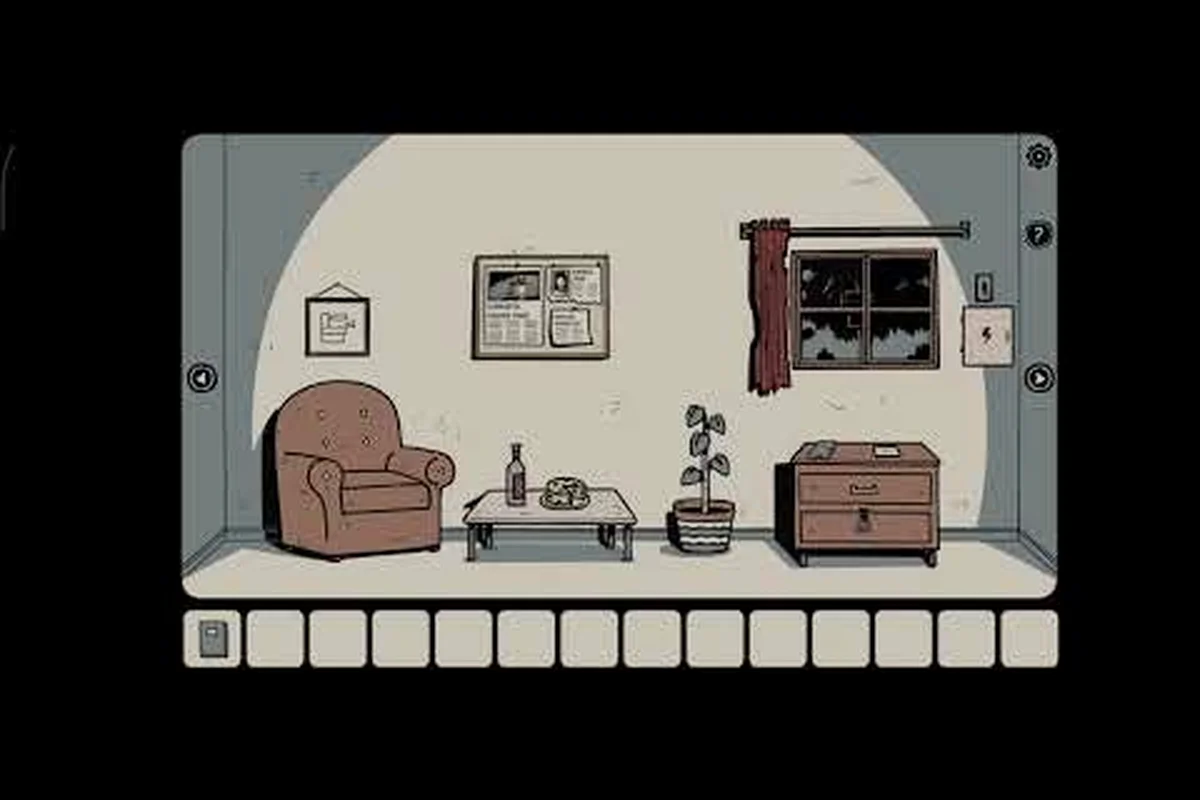
The Girl in the Window is a point-and-click escape room by Dark Dome, and the number puzzles sitting at the heart of its four puzzle chains are where most players get stuck for hours. This guide breaks down every digit-based lock, sequence, and entry riddle you will encounter, including the hard puzzles that even walkthrough veterans flag as the trickiest gates in the room.
Understanding Number Puzzles in the Girl in the Window
The number puzzles in The Girl in the Window are not random guessing games. Each one ties back to an object already in the room, a visual pattern on a wall, or a clue you picked up two scenes earlier. The puzzle designer at Dark Dome leans on three core types: digit-entry locks (where you type a 2-4 digit code into a keypad or combination box), sequence-based number puzzles (where the answer comes from counting, sorting, or ordering visual elements), and hybrid pattern puzzles (where numbers and symbols blend together to form a single solution).
Players who treat the game like a brute-force brute often burn twenty minutes tapping random combinations on a single lock. The community-sourced GameFAQs walkthrough, for instance, organizes the entire game into four key-item chains precisely because the number puzzles are gated behind investigative progress, not luck. Recognizing which type you are facing is the first real step toward solving it.
The Three Number Puzzle Families
| Puzzle Family | Core Mechanic | Example Trigger | Typical Difficulty |
|---|---|---|---|
| Digit-Entry Locks | Type a 2-4 digit code into a keypad or safe | Box, drawer, door code | Easy to Hard |
| Sequence Puzzles | Count, sort, or reorder visual elements | Leaf counting, symbol order | Medium |
| Hybrid Pattern Puzzles | Combine numbers with shapes, objects, or colors | TV knob, flower pot arrangement | Hard |
A useful rule of thumb: if you can spin it, flip it, or rearrange it on-screen, you are looking at a sequence puzzle. If you are staring at a static code input field, the answer lives somewhere else in the room, and your job is to go find it.
Decoding the Digit-Entry Code Puzzles
Digit-entry code puzzles are the most common gate in The Girl in the Window. Every box, drawer, and locked compartment hides a small 2 to 4 digit combination, and every combination is sourced from something visual in the environment. According to the official Steam page for The Girl in the Window, the game tasks you with opening drawers and deciphering codes "in your power to escape the room", which is a fair summary of how the digit-entry gates work.
Where the Codes Actually Live
Players consistently report that the code is never invented. It is always one of three things: a count (how many of a particular object appear in a frame), an arrangement (the order in which symbols or shapes sit relative to each other), or a cross-reference (a number scribbled on one prop that matches a hidden lock somewhere else). The Reddit thread asking for help with the symbol-order puzzle, for instance, shows a player staring at a cross, a glass of wine, a mirror, and a clove of garlic, with the correct sequence tied to a clue image seen earlier in the chapter.
| Code Type | Where to Look | Reading Clue |
|---|---|---|
| Count-based | Walls, posters, frames | "How many X appear on this surface?" |
| Arrangement-based | Symbol clusters, shelf orders | "Left to right or top to bottom?" |
| Cross-reference | Notes, diaries, scribbles | "Match the number on paper A to lock B." |
For step-by-step solutions on the most-cited locks, the dedicated drawer code breakdown walks through the wire, light, TV knob, and flower pot mini-puzzles in order. That ordering matters because the wire and light locks share the same power source, so solving them out of sequence can force you to undo finished work.
Typos and Order Errors with Codes
The single biggest mistake players make is treating a digit-entry lock as standalone. The puzzle is rarely the lock itself; the lock is the verification step, and the actual solve happened when you noticed that the painting has seven frames or that the diary entry ends with the number 3-1-4. If you are stuck on a code, leave the room, walk the entire space again, and tap every wall-mounted object. Most hard puzzles in this category are solved by a single number you skipped on your first sweep.
A second common trap is entering the digits in the wrong direction. Several sequence puzzles in the game read top-to-bottom while the lock expects bottom-to-top, which causes the code to be permanently wrong even when every digit is correct. When in doubt, flip the order and try again before concluding that you miscounted.
Pattern Puzzles: Symbols, Shapes, and Visual Order
Pattern puzzles are where The Girl in the Window earns its puzzle game reputation. Unlike the digit-entry locks, which only require you to recognize a number, pattern puzzles demand that you interpret a relationship between multiple visual elements and translate that relationship into a sequence, a rotation, or a position on a dial.
The classic example is the symbol-order puzzle, where you are presented with four items and asked to arrange them according to a hidden rule. Community reports describe spending more than an hour on this single challenge because the rule is never stated directly. The clue, almost always, is a small detail in a different room: a painting angle, a knocked-over glass, a torn page that mentions the order of "things that ward off evil" or "things that appear at dinner." The puzzle is solvable, but only if you read the room as a single connected system rather than four independent corners.
Pattern Puzzle Archetypes
| Archetype | Visual Cue | Solve Method |
|---|---|---|
| Symbol Order | 3-5 items in a cluster | Match to a story clue |
| Rotation/Alignment | Dials, knobs, clock-style faces | Turn until parallel to a reference line |
| Color/Shape Match | Grouped items with mixed attributes | Sort by a single attribute named in a note |
| Counting Hybrid | Visual elements + numbers | Count a specific type only (e.g., red leaves) |
For full coverage of the symbol order, password, and code-based pattern challenges, the broader puzzle solutions hub collects every pattern answer in a single chain-by-chain order. Keeping one master list also protects you on replays, when the randomized answers make memory alone unreliable.
Why Pattern Puzzles Feel Impossible
Pattern puzzles feel impossible because they require lateral thinking under time pressure, and the game gives you very few hints before locking you into the interaction. The pattern puzzle help that experienced players share in community threads usually comes down to one piece of advice: stop looking at the items in front of you and look for the rule that connects them. A cross and a mirror have no obvious relationship until you remember a painting of a vampire from two rooms back, at which point the order becomes self-evident.
Another reason these puzzles stall players is the false-positive loop. You enter a sequence, the game shakes the lock, you assume one digit is wrong, and you start brute-forcing the third position while ignoring the first two. When you have tried a pattern puzzle for more than ten minutes, step away, walk the whole room, and reset your assumptions. The hard puzzles in this game are rarely the ones that test your logic; they are the ones that test your willingness to abandon a wrong theory.
The Hard Puzzles: Where Most Players Get Stuck
The Girl in the Window has a clear difficulty curve, and the hard puzzles sit at the end of each of the four key-item chains. Community walkthroughs consistently flag three puzzles as the highest-stall points in the entire game: the symbol-order riddle described in the Reddit help thread, the TV knob rotation puzzle, and the leaf-counting sequence that gates one of the later drawers. Each one combines a number element with a visual or contextual clue, which is why they resist brute force and frustrate first-time players.
Difficulty Tier Breakdown
| Puzzle | Category | Reported Stall Time | Primary Solve Skill |
|---|---|---|---|
| Symbol Order (cross, wine, mirror, garlic) | Pattern | 30-90 min | Cross-room story reading |
| TV Knob Rotation | Hybrid | 15-45 min | Spatially matching a reference image |
| Leaf Counting | Sequence | 10-30 min | Attribute filtering |
| Final Drawer Code | Digit-Entry | 20-60 min | Multi-step clue chaining |
The TV knob and leaf-counting puzzles are covered in detail alongside other hybrid challenges in the drawer code and light puzzle guide, which goes through the exact dial positions and counts you need. Both challenges reward the same habit: read the clue twice before you touch a single dial.
Scanning for Number Clues First
The single biggest unlock for hard puzzles is learning to read the room in layers. The first layer is the obvious interactable objects: drawers, boxes, posters. The second layer is the environmental storytelling, including which objects are dusty, which are clean, which are out of place, and which are missing. The third layer is the narrative: a line of dialogue from Mia, a torn page in the diary, a phrase repeated in two separate notes. The hard puzzles almost always live in the third layer, because the developer expects you to connect a story beat to a physical object across a long stretch of gameplay.
When you reach a hard puzzle and feel stuck, scan the room for the layer-two and layer-three clues before touching the lock. A single sentence in the diary, which felt like flavor text on your first read, often turns out to be the answer key. The game is designed so that the answer is always reachable from a clue you already have, which means the solve is a memory test as much as a logic test.
Practical Puzzle Help: A Step-by-Step Solve Loop
Every number puzzle in The Girl in the Window can be cracked with a repeatable loop. The community-sourced walkthroughs from jimfish on GameFAQs and various Dark Dome fans on YouTube follow essentially the same four-step process, even when they describe it in different words. The version below is a streamlined approach for new players who want a reliable method rather than a list of specific answers.
The Four-Step Solve Loop
| Step | Action | What You Get |
|---|---|---|
| 1. Identify the family | Digit-entry, sequence, or hybrid? | Right problem-solving mindset |
| 2. Audit the room | Tap every wall, read every note, count every object | Candidate numbers or symbols |
| 3. Cross-reference | Match candidates to nearby clues | Narrowed set of plausible answers |
| 4. Test and reset | Try the answer, fail or succeed, then audit again | Either the solve or the next clue |
This loop is also useful for tracking progress. If you reach step 3 and your candidate set is empty, that is a signal to go back to step 2, not a signal that the puzzle is broken. The hard puzzles in the game are designed to send you back to step 2 at least once, so a "failure" on the first try is part of the normal flow, not a sign that you missed something fundamental.
When to Take a Break
Puzzle fatigue is real, and the game is short enough that you can complete it in one sitting if you are fresh, but only if you stop when the loop starts spinning. The clearest signal is the moment you start trying codes that have no narrative justification. If you find yourself typing 1-2-3-4 into a lock just to see what happens, the puzzle has stopped being a logic problem and has become a frustration problem. Walk away, do something else, and come back. The clue you missed will usually pop out within thirty seconds of your return, because your brain has had time to separate the relevant details from the noise.
For a broader view of how these puzzle loops fit into the larger game flow, including how the key-item chains are organized and when to expect each hard puzzle, the gameplay and item combination guide gives a high-level map of the chapter.
How Number Puzzles Connect to Key-Item Chains
The GameFAQs walkthrough by jimfish breaks the game into four main puzzle chains, each ending with a key item. The number puzzles are not scattered randomly through the room; they are arranged so that solving one chain unlocks the physical access required to start the next. A drawer you cannot open yet contains a key, which means a number puzzle gates the key, which means a pattern puzzle gates the drawer, which means a hybrid puzzle gates the pattern, and so on down the chain.
This is why brute-forcing one number at a time feels hopeless. The puzzle you are stuck on often requires an item from a chain you have not started, which is why experienced walkthrough players recommend completing chains in order rather than picking at individual locks. A solid puzzle guide for the full game lays out the chain sequence so you always know which key item to chase next.
Chain Sequence at a Glance
| Chain | Primary Number Puzzle | Key Item Granted | Unlocks Next |
|---|---|---|---|
| 1 | First drawer code | Small key | Chain 2 access |
| 2 | Leaf counting sequence | Combination item | Chain 3 access |
| 3 | TV knob rotation | Final dial piece | Chain 4 access |
| 4 | Symbol order + final code | Escape | Game complete |
If you treat each chain as a closed loop, you will rarely feel lost. The moment a number puzzle seems impossible, ask which chain it belongs to, then verify you have the prerequisites for that chain. If you do not, the puzzle is not yet solvable, and the right move is to backtrack rather than grind.
A Note on Save Strategy
Because the number puzzles gate key items that gate further puzzles, the moment you crack a code is also the moment you most want a save. The how to save and controls guide walks through the save system on both mobile and Steam, including how to make sure a solved code does not get reset by an accidental chapter reload. Saving right after each key-item pickup is a small habit that saves a lot of re-solving later.
Frequently Asked Questions
What is the fastest way to solve The Girl in the Window number puzzles?
Stop looking at the lock and look at the room. The number puzzles in The Girl in the Window are always sourced from a count, an arrangement, or a cross-reference somewhere in the environment, so a full sweep of the room usually surfaces the answer within a few minutes, especially for digit-entry codes.
Which puzzles count as the hard puzzles in The Girl in the Window?
The symbol-order riddle, the TV knob rotation, and the leaf-counting sequence are the three challenges most players report as the hard puzzles in the game, because each one blends a number answer with a visual or narrative clue from a different part of the room.
Do the code puzzles reset if I enter the wrong number?
No, the code puzzles do not reset, but you do not get told which digit is wrong. If your code fails, the simplest move is to re-audit the room, double-check the reading direction of any sequences, and try the answer again with one digit flipped before assuming you miscounted the underlying clue.
Can I solve The Girl in the Window pattern puzzles without the diary notes?
Almost never. The pattern puzzles rely on narrative clues that appear in diary entries, dialogue, and torn pages, so skipping the text means skipping the most important hint layer. Reading every note the first time you encounter it saves significant backtracking later.
Is there a way to tell if a number puzzle is digit-entry, sequence, or hybrid before I start?
Yes: if it is a static keypad or combination box, it is digit-entry. If it has moving dials, knobs, or rearrangeable tiles, it is sequence or hybrid. The hybrid puzzles always combine a number with a visual element, so they are the ones that feel like they are testing two skills at once.