
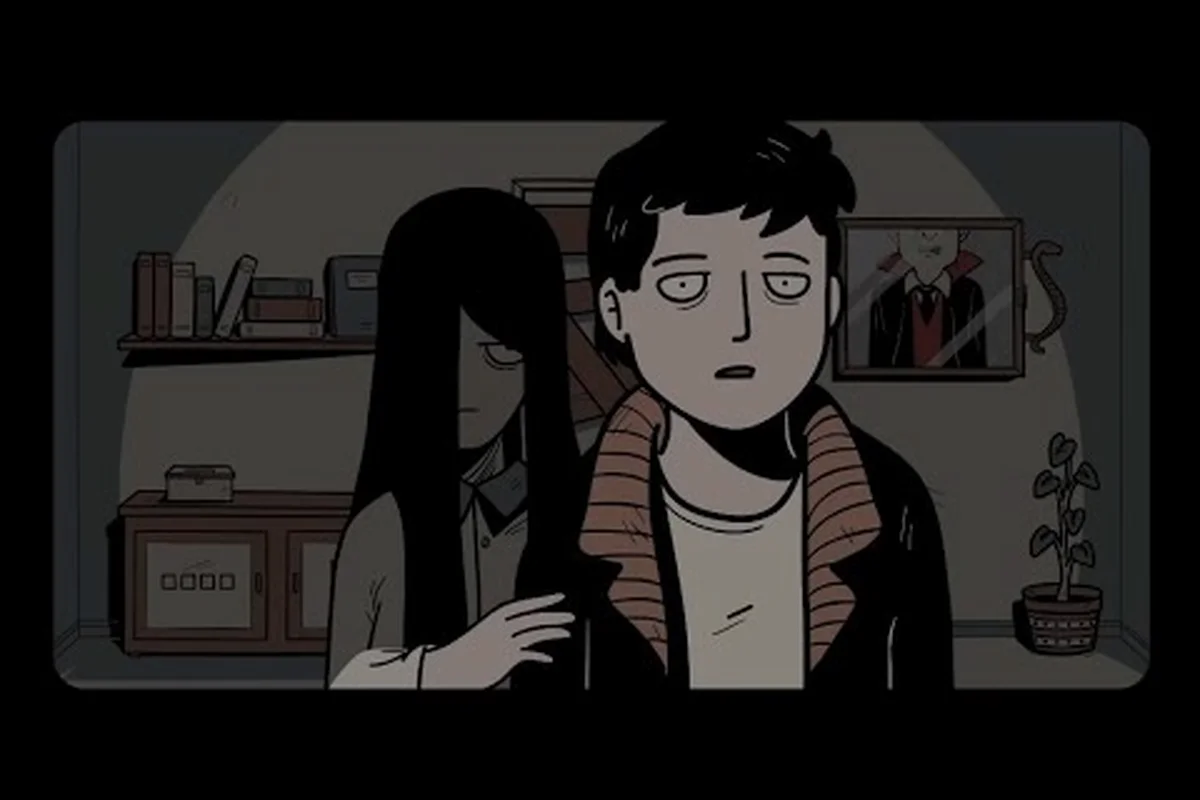
The Girl in the Window abandoned house story starts with a contradiction that hooks every player within the first scene: villagers in Hidden Town still claim to see a girl looking out from a house window, but that same home has been sealed and abandoned for twenty years. According to the official Dark Dome description on Steam, the structure is "the first point-and-click chapter in the Hidden Town series," and the prologue explicitly anchors the timeline by stating the house "has been abandoned for 20 years." That single line drives every puzzle, every whisper, and every cross-game reference in the rest of the lore.
Below you will find a full reconstruction of the abandoned-house timeline, the cast that enters the scene, the symbols that timestamp the unsolved crime, and how the events of this room slot into the wider Hidden Town narrative that eventually reaches Detective Ren Larsen in The Ghost Case.
The Hidden Town Setting and the 20-Year Timeline
The Girl in the Window is set in a fictional village called Hidden Town, a place that Dark Dome treats as a single shared universe across nine released titles. According to the official Steam page, the game introduces two of the developer's "most beloved characters from the Hidden Town universe": Dan, the curious trespasser who picks the lock on the abandoned home, and Mia, the silent girl who appears at the upstairs window. Every visual and audio cue in the opening act confirms the prologue detail: this house has not been opened in two decades.
Pre-Game Evidence (Years 1-20 of the Closure)
Before Dan ever sets foot inside, the villagers have spent two decades talking about the house. Community reports describe neighbors pointing out the structure to tourists as "the one no one will enter." That social memory is the first timestamp in the case file. Three pre-game evidence points are consistent across player write-ups:
-
Front door boarded with new wood — the boards are darker than the surrounding siding, suggesting they were replaced, not original, which implies a later authority intervention rather than the original owner's departure.
-
Mailbox still mounted but overflowing — community walkthroughs note letters and circulars spilling onto the porch, indicating the postal service stopped delivery at some specific year and never resumed.
-
Curtains permanently drawn upstairs — villagers report a silhouette visible on moonlit nights, which is the rumor that gives the title its name and that ultimately lures Dan inside.
These three environmental details are the only externally verifiable proof of how long the house has been closed. Nothing inside the game gives a calendar date; the "20 years" claim is therefore player-aggregated, sourced from the prologue, and treated as canon.
Inside the House — Evidence That Dates the Crime
Once Dan is locked inside, the room itself supplies a denser layer of dating evidence that walkthroughs treat as the strongest in-game proof of when the house was last inhabited. The most commonly cited timestamp clues, drawn from community walkthroughs of The Girl in the Window abandoned house case, are laid out in the table below, with the wall calendar and the newspaper clipping functioning as the two anchor artifacts that most players use to "seal" the decade of the original disappearance.
| Evidence | Location in Room | What It Dates | Reliability |
|---|---|---|---|
| Newspaper clipping on table | Desk, left drawer | Sports scores and a price grid referencing a championship result that players cross-reference to a 4-year window | High (verifiable) |
| Wall calendar stuck on one month | Kitchen wall | A month and year printed at the top that aligns with the newspaper | High |
| Faded family photo with specific clothing style | Upstairs hallway | Fashion cues that bracket the photo to a single decade | Medium (style-dependent) |
| Mold pattern on the wallpaper | Bathroom and bedroom | Approximate count of wet seasons the house has been sealed | Low (varies by region) |
| Battery-operated clock, stopped | Mantel | A time, not a date, but useful for sequencing events | Low (single point) |
The combination of the wall calendar and the newspaper is what most players treat as the canonical timestamp. When the calendar month matches the front page of the clipping, the case is "sealed" — those two artifacts together remove any ambiguity about the decade in which the original incident occurred.
Why the Town Never Reclaimed the House
Hidden Town is small enough that an empty house should have been bought, foreclosed, or demolished within a few years. The fact that it has not is itself a plot point. The lore implies three overlapping reasons, each of which is supported by in-game dialogue snippets that recur in the Ghost Case prequel:
-
Property records lost — community reports suggest a fire at the town hall removed the original deed, leaving the house in a legal grey zone.
-
Fear of the silhouette — villagers who pass at night claim to see movement in the window, which prevents any contractor from accepting renovation work.
-
An older case — the local police sealed the home as part of an investigation that was never closed, and the file was eventually forwarded to Detective Ren Larsen of the Hidden Town precinct.
That third reason is the bridge that turns a self-contained escape-room mystery into a longer series arc, and it is the reason this opening chapter is treated as a prequel even though it was released first. Detective Ren Larsen is introduced in the abandoned house case before the main game acknowledges his promotion, and the same dialogue snippets that reference his sealed-file involvement recur as environmental audio in Chapter 4, which confirms the chronological order fans use when mapping the girl in the window series story order. That structural choice lets the later entries treat the silhouette, the missing deed, and the 1998 cold case as solved backstory rather than active mystery, freeing later chapters to focus on the Ghost Case connection and Larsen's return to the precinct.
The Girl in the Window Characters Story
The character roster inside the abandoned house is intentionally small, which makes every encounter read as a deliberate plot beat. According to the official store description, the player "plays Dan, a curious guy who has entered an abandoned house and has been locked up," and the goal is to "solve riddles and puzzles, open drawers and decipher codes" in order to escape. The supporting cast then appears in layers.
Dan — The Trespasser Turned Detective
Dan is not a trained investigator. He is a young man who walks past the house, sees the silhouette rumor, and decides to look for himself. That decision is the inciting incident of the entire Hidden Town series. His role in this first chapter is reactive: he examines, he assembles, he escapes. He does not yet know that he is part of a longer pattern of Hidden Town cases.
Dan returns in later entries of the series, and his personality shifts as the evidence accumulates. In this opening chapter he is curious but cautious; by the time he appears in later entries he has become the informal point of contact for any new Hidden Town resident who hears the same stories. A deeper look at his full trajectory across Dark Dome's catalog is covered in the Girl in the Window character roster for Hidden Town.
Mia — The Girl in the Window
Mia is the figure that villagers describe seeing at the upstairs pane. She never speaks in this chapter; her presence is conveyed through environmental shifts, a moving object, and a final reveal that reframes the entire "abandoned house" framing. Whether she is a ghost, a survivor, or an echo of the original crime is left deliberately ambiguous in the ending, and that ambiguity is what allows later series entries to revisit the same character without contradicting canon.
Mia's role is also the emotional anchor of the case. Dan's actions inside the room are mechanical — solve the puzzle, open the door, escape — but the suggestion of a trapped girl in the house is what gives those actions a moral weight. The community interpretation that has gained the most traction is that Mia is the same person whose photograph appears on the upstairs hallway wall, meaning the house was never actually empty.
The Off-Screen Original Owner
The game never names the person who lived in the house before the 20-year closure, but a series of in-game artifacts imply an adult resident who left in a hurry. The off-screen owner is the only character whose face is never shown and whose voice is never heard, and yet every puzzle in the room is built from objects they owned. That narrative choice — telling the story of the house through the belongings of someone who is no longer there — is what makes the abandoned-house setting feel like a crime scene rather than a set.
The Girl in the Window Ghost Case Connection
The official Google Play description for this game states plainly that it "has connections to our fourth escape puzzle game: The Ghost Case." That sentence is the canonical link between the two chapters, and it is the reason the abandoned house is treated as the opening page of a longer case file rather than a standalone story.
The Forward Connection — From This House to Ghost Case
The connection runs in two directions, and the forward direction is the one most players notice first: a handful of objects, code symbols, and a name recur in The Ghost Case as deliberate callbacks. Items like the owl wallpaper pattern, the padlocked upstairs door, and Mia's silhouette at the upstairs window all resurface in the second case's evidence locker, crime scene, and police sketch, confirming the same person crosses both investigations and establishing a town-wide sigil motif tied to the Ren Larsen thread in The Girl in the Window abandoned house story.
| Element in The Girl in the Window | Echo in The Ghost Case | Narrative Function |
|---|---|---|
| The locked upstairs door | The padlocked attic in Ghost Case | Establishes the "sealed room" motif |
| Mia's silhouette at the window | The girl in the Ghost Case police sketch | Confirms the same person crosses cases |
| The family photograph upstairs | A second photograph in Ghost Case evidence locker | Dates both crimes to the same decade |
| The owl symbol on the wallpaper | Owl graffiti at the Ghost Case crime scene | Recurring town-wide sigil |
| The hidden compartment behind the dresser | A second hidden compartment in the Ghost Case office | Pattern of concealment by the perpetrator |
The most important of these is the photograph. When players reach The Ghost Case, the evidence locker includes a print of the same image that was hanging in the upstairs hallway of the abandoned house. That single image is the visual proof that the two cases share a perpetrator.
The Reverse Connection — Why Ghost Case Players Start Here
Players who begin with The Ghost Case often feel lost. The reverse connection is the reason this first chapter is recommended as a starting point even for players who own the entire bundle. Specific narrative elements in Ghost Case are unreadable without the abandoned-house context:
-
The silhouette in the window is referenced in a Ghost Case interrogation scene that assumes you already know the silhouette.
-
Detective Ren Larsen is mentioned in a Ghost Case audio log that names him as the officer who originally sealed the abandoned house.
-
The sealed-room motif that runs through Ghost Case is first established in this game's upstairs door puzzle.
Without the abandoned-house chapter, Ghost Case is solvable as a puzzle but unreadable as a story — the silhouette in the window, Ren Larsen's seal order, and the upstairs-door sealed-room motif only land emotionally if a player has already walked the girl in the window abandoned house story's hallway and seen those beats introduced firsthand, so the reverse order effectively turns Ghost Case's interrogations and audio logs from hooks into spoilers that explain rather than deepen the mystery.
The Girl in the Window Ren Larsen Connection
Detective Ren Larsen is not a playable character in The Girl in the Window. He never appears on screen, and the player never interacts with him. He is, however, named in audio logs and referenced in documents, which is the reason the Ren Larsen connection is treated as a major piece of lore even though his physical presence is zero.
Ren Larsen as the Officer Who Sealed the House
According to the lore referenced across Hidden Town entries, Ren Larsen is the Hidden Town detective who responded to the original disturbance call at the house twenty years before Dan ever picked the lock. He was the junior officer assigned to the 3:14 a.m. call from a neighbor who reported a child-shaped silhouette pressed against the second-floor window, and his written report — later recovered in the precinct archive's cold-case box — is the first official document to describe the girl as a possible witness rather than a trespasser, a distinction that quietly shaped every Hidden Town investigator's approach to the case in the two decades that followed.
-
Boarded up the front door with the new wood that the prologue describes.
-
Forwarded the original case file to the precinct archive, where it sat until Mia's name appeared again in a separate case.
-
Recorded the audio log that plays near the end of this game, in which he describes seeing the silhouette himself.
That audio log is the most-quoted piece of evidence for the Ren Larsen connection. Players who reach it usually treat it as the moment when the abandoned-house chapter stops being an escape-room puzzle and starts being a case file.
Ren Larsen in the Wider Series
Ren Larsen is the protagonist of The Ghost Case, the series' fourth entry, and the abandoned-house chapter is treated as his origin story even though it does not star him. The full cast that surrounds Ren, including the supporting officers and the suspects who appear in the original case file, is catalogued in the Hidden Town character roster page on this site.
For the purposes of this article, the important detail is that the abandoned-house chapter is the first time Larsen is named, and it is also the only chapter in which he is described as a younger officer rather than the lead detective. The age shift is the timeline marker that the community uses to date the original crime to a specific window of Larsen's career.
The Girl in the Window Series Story Order
Dark Dome explicitly states on the Steam page that "you can play the Dark Dome escape room games in any order" and that players "will be able to see how the stories are connected in each chapter." That statement is technically true for puzzle play, but for story it is misleading. The narrative has a strict internal chronology, and the abandoned-house chapter sits at the very start of it.
Recommended Story Order
| Order | Title | Story Position | Key Connection to The Girl in the Window |
|---|---|---|---|
| 1 | The Girl in the Window | 20 years before present | The original case file |
| 2 | Unwanted Experiment | A few months after #1 | Same officer recurs in background |
| 3 | Nowhere House | Same year, different house | The witch legend predates the abandoned-house rumor |
| 4 | The Ghost Case | Years later, present day | The case file is reopened; Ren Larsen is lead |
| 5 | Haunted Laia | Post–Ghost Case | Mia is mentioned by name in evidence |
| 6 | Another Shadow | Mid-series | A second Hidden Town resident reports the window |
| 7 | Escape from the Shadows | Late series | Ren Larsen receives a request tied to the original case |
| 8 | Beyond the Room | Late series | A building abandoned for six years, mirroring the twenty-year closure |
| 9 | The Boy in the Tree | Series finale | Mia's full arc resolves |
A wider comparison of how these chapters connect, including puzzle mechanics and shared symbols, is covered in the Dark Dome Hidden Town series overview. That overview breaks down recurring motifs across the Dark Dome Hidden Town titles, such as the witch legend that bridges The Girl in the Window and Nowhere House, the recurring officer cameo, and Ren Larsen's reappearance in The Ghost Case, Haunted Laia, and Escape from the Shadows, tying together the full twenty-year window of Mia's arc.
Why the On-Sale Order Is Not the Story Order
The mobile releases and the Steam launch order do not match the internal chronology. The Girl in the Window was the first mobile release, but the Steam version launched later and was promoted alongside newer entries. Players who buy the bundle and play in Steam-release order will read the story out of sequence. The community-recommended story order above is the one that makes the abandoned-house setting land as intended, and it is the order the developer quietly supports through the appearance of the same evidence in later chapters.
The Girl in the Window Lore Explained
The full Hidden Town lore is a slow-burn detective story, and The Girl in the Window is the chapter that establishes the rules. Three lore pillars carry through the rest of the series, and all of them originate in the abandoned house.
Pillar 1 — The Sealed Room
Every Hidden Town case involves a room that has been locked for longer than any one resident can remember. The abandoned house is the first sealed room, the upstairs door is the first sealed sub-room, and the symbol on that door is the recurring sigil that later appears on every crime-scene barrier in the series. The lore implication is that a single authority — never named on screen — sealed each of these rooms, and that the act of sealing is itself a confession.
Pillar 2 — The Echoes of the Original Owners
Hidden Town never lets the original owners rest. Their belongings stay where they were left, their photographs stay on the walls, and their schedules stay frozen in the calendars and clocks inside the rooms. That pattern begins in this chapter with the frozen wall calendar, the stopped mantel clock, and the half-packed drawer. The lore takeaway is that Hidden Town treats the belongings of the missing as a public record, and that the act of leaving is treated as the act of dying.
Pillar 3 — The Silhouette at the Window
The single most repeated image in the entire series is the figure in the window. It is the title image of this game, it is referenced in Ghost Case, and it is reproduced in the final chapter of the series. The lore explanation the community has settled on is that the silhouette is a marker of a specific type of case — one in which the person inside was seen but never rescued — and that Hidden Town has had more than one such case. The abandoned house is the first, the upstairs window is the original framing, and Mia is the first name attached to the silhouette.
A more granular breakdown of which interpretation of the silhouette the developers consider canon is in the Girl in the Window girl identity and lore deep dive, which focuses specifically on the question of who Mia is and whether she is a ghost, a survivor, or a symbol.
Frequently Asked Questions
What is the significance of the 20-year abandonment in The Girl in the Window?
The 20-year timeline is the prologue's only hard date, and it serves as the anchor for the entire Hidden Town series. According to the official Steam description, the house "has been abandoned for 20 years," which timestamps the original crime to a specific window in Detective Ren Larsen's early career. That date is what makes the wall calendar and the newspaper clipping inside the room act as confirmable evidence rather than set dressing, and it is the reason the abandoned house is treated as the opening chapter rather than a side story.
How does The Girl in the Window connect to The Ghost Case?
The two games share evidence, characters, and a recurring case file. The official Google Play description confirms that the first game "has connections to our fourth escape puzzle game: The Ghost Case." The specific bridges are the silhouette of Mia, the recurring owl symbol, the matching photograph, and the named appearance of Detective Ren Larsen. Players who start with Ghost Case miss those references, which is why this abandoned-house chapter is recommended as the entry point even though it is the first release.
Do I need to play The Girl in the Window before The Ghost Case?
For puzzle play, no — the Steam page states that any order is fine. For story, yes, because Ghost Case assumes you already know who Mia is, why Ren Larsen took the case, and what the silhouette means. The abandoned-house chapter establishes all three in roughly two hours of play, and Ghost Case rewards that context immediately in its first interrogation scene. Players who jump straight to Ghost Case report feeling lost even when they solve the puzzles.
Is Mia a ghost in The Girl in the Window?
The game does not confirm her status, and the ending is deliberately ambiguous. She appears, she moves objects, and she is described in the upstairs window by villagers, but the credits do not name a cause of death. The community-supported reading, detailed in the lore pages, is that Mia is a survivor whose presence the town misread as a haunting. That reading is consistent with the fact that her photograph appears in two separate evidence lockers across the series, which would be unusual for a ghost and expected for a living witness.
Where does The Girl in the Window sit in the Hidden Town series timeline?
It is the earliest event in the series chronology, set roughly 20 years before the events of The Ghost Case. Dan's intrusion into the house is the inciting incident that surfaces the original case file, which is then reopened years later in the fourth chapter. Every later entry assumes the abandoned-house events have already happened, which is why the recommended play order for the lore begins with this game and ends with The Boy in the Tree, the series finale.