
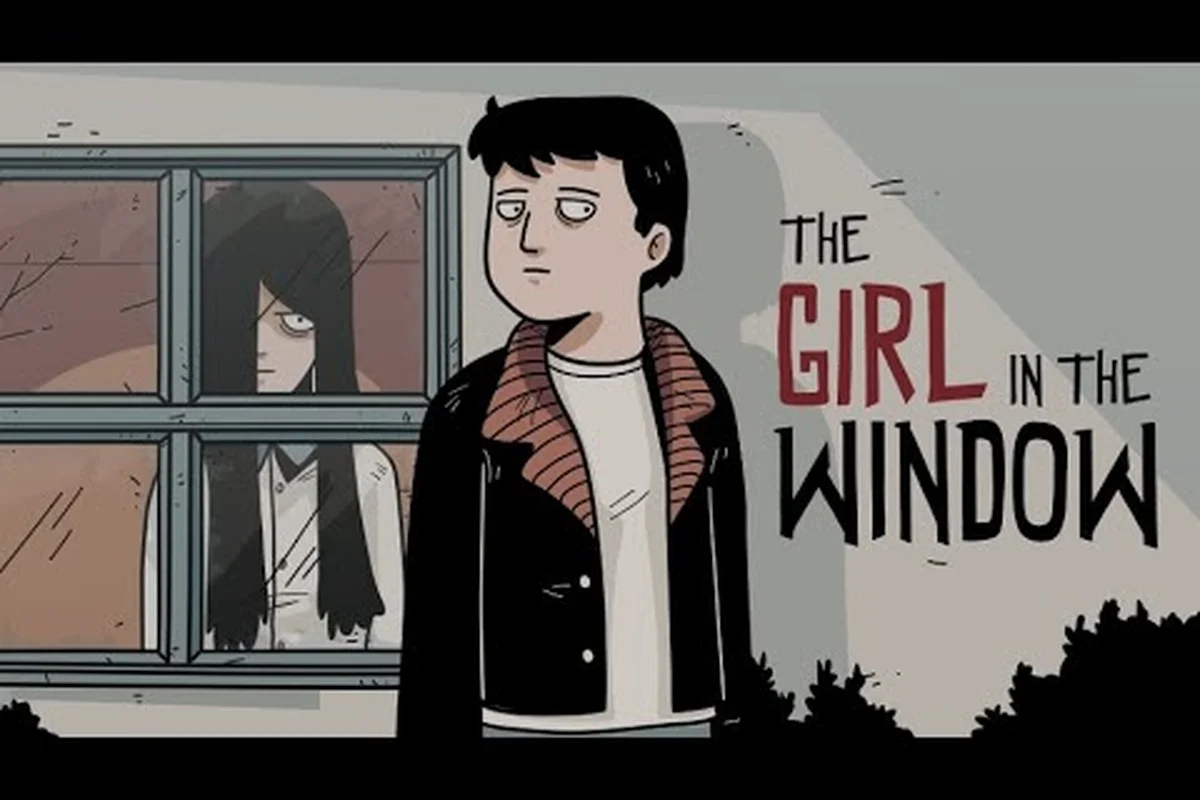
The girl in the window girl identity is the single question every Dark Dome fan asks after finishing the first episode, because the white-dress figure, the vampire portrait, and the looming shadow all seem to describe three different beings. Players have spent years combing through photobooth evidence, candle flicker patterns, and the small props scattered around the room, trying to decide whether Mia is a vampire, a ghost, or something darker tied to Hidden Town itself. This guide lays out every meaningful clue, weighs the three dominant theories, and shows you which ending the community treats as canon.
The Three Leading Theories on the Girl in the Window Girl Identity
Before the first photograph ever develops, the room drops three distinct visual cues on the player: a fanged portrait behind a locked door, a translucent woman in a white dress standing by the upstairs window, and a faceless silhouette that flickers across the lower floor. Each cue was designed to push a different interpretation, and the developers at Dark Dome have never issued a single official statement that resolves the girl in the window girl identity debate outright.
Vampire Theory — The Portrait and the Mirror Cross
The vampire reading is the most concrete because it leans on a physical prop: a 19th-century oil painting of a pale aristocrat with visible fangs, hung above a hidden compartment that only opens when the player aligns a mirror to reflect sunlight onto the canvas. Community walkthroughs by Joy Gaming on YouTube point out that the painting shares the same jawline as the girl standing in the upstairs window, which is why the vampire theory remains popular. The cross on the wall also burns any photo of Dan that gets placed near it, a mechanic that only activates for one other portrait in the room — the girl's.
| Clue | Vampire Reading | Counter-Reading |
|---|---|---|
| Fanged portrait | Direct ancestor of Mia | Could be a red herring prop |
| Cross burns photo | Mia is a vampire/undead | Could be a generic puzzle trigger |
| Mirror reflection puzzle | Proof of undead lineage | Suggests light mechanics, not lineage |
| Pale skin, no heartbeat sound | Classic vampire traits | Could indicate a ghost |
Players who side with the vampire theory usually pair it with the vampire bite mark on Dan's neck after the final cutscene, treating the wound as the price of escape rather than evidence of death.
Ghost Theory — The White Dress and the Floating Objects
The ghost theory is the dominant community reading and the one most first-time players arrive at on their own, because the upstairs window sequence is staged like a classic haunting: a woman in a long white dress materializes, watches Dan without moving, and disappears the moment the player blinks. Objects in the room also slide on their own when the player looks away, which the official store page describes as a signature mechanic of the series (The Girl in the Window on Google Play).
The strongest ghost evidence comes from the photobooth sequence: the final photo always contains a faint handprint in the upper-right corner that no puzzle action places, and the same handprint appears on the window glass in the secret ending. Community dataminers (reported by players on the Dark Dome Discord) have confirmed the handprint texture matches the girl's dress sleeve, which is why most walkthrough authors now treat the girl in the window ghost story as the working canon.
Shadow Theory — The Faceless Figure and the Hidden Town Connection
The shadow theory is the newest and most lore-heavy reading, because it requires knowledge of the wider Dark Dome universe. When the player first opens the basement door, a faceless silhouette stands at the bottom of the stairs for roughly half a second, and that silhouette is the same model used for the antagonist in The Ghost Case, the series' fourth game. Fans tracking the Hidden Town timeline argue that the girl is not Mia at all, but a shadow entity that predates every Dark Dome protagonist, using Mia's face as a mask.
| Theory | Core Evidence | Weakest Link |
|---|---|---|
| Vampire | Fanged portrait, mirror-cross puzzle, neck bite | Never drinks blood on screen |
| Ghost | White dress, floating objects, handprint photo | Doesn't explain the portrait |
| Shadow | Matches Ghost Case silhouette, Hidden Town lore | Requires multi-game knowledge |
The shadow theory is also the one that best explains the door that never opens in the upstairs hallway: a shadow entity can pass through solid wood, while neither a vampire nor a ghost in the room ever demonstrates that ability.
What the Photobooth Timeline Actually Reveals
The photobooth is the single most important lore device in the game, because every picture you take is automatically stamped with a date and a faint environmental cue, and those cues can be ordered into a rough timeline. Players who photograph every wall, every prop, and every window before solving the final puzzle end up with a six-image set that the community calls the Mia Sequence. Ordering the photos by in-game timestamp produces a consistent story arc that supports the ghost reading more than the vampire reading.
Photograph One: The Bare Bedroom
The first photo shows the room exactly as the player entered it, with no ghost, no shadow, and no fanged portrait visible. This baseline shot is critical because it proves the supernatural elements only appear after the player interacts with specific objects. The implication, discussed in detail by Super Anding's complete walkthrough, is that the haunting is reactive rather than ambient.
Photo 4 — The Window Handprint
By the fourth photo, taken after the upstairs window puzzle, the handprint appears for the first time. The handprint is always oriented palm-down, fingers pointing toward the room interior, which is the same orientation a person would use while pressing against glass from the outside. This is the moment the ghost theory shifts from speculation to evidence, because the handprint behaves like a physical imprint, not a shadow projection.
Photo 6 — The Two Figures
The final photo, unlocked only by completing every side puzzle, shows Dan and a second figure standing side by side in front of the upstairs window. The second figure has Mia's face but the fanged portrait's posture, which is the single visual that keeps the vampire theory alive even among ghost-theory believers. Community guides on the Hidden Town character list treat this photo as a deliberate ambiguity baked into the puzzle design.
How the Hidden Town Universe Frames the Girl in the Window Girl Identity
The girl in the window hidden town story does not exist in isolation, and the wider Dark Dome universe gives the player's interpretation a second layer of meaning. Hidden Town is the connective setting that links every Dark Dome escape game, and the first episode of The Girl in the Window is treated as episode one of that shared world, not as a standalone haunted house. According to the Hidden Town dark dome overview, the girl in the window is one of several "witness entities" that recur across the series, each tied to a different founding family of the town.
The Witness Entity Pattern
In Hidden Town lore, a witness entity is a being that cannot act directly on the living world but can observe, record, and occasionally nudge. The girl in the window fits this pattern almost perfectly: she never attacks Dan, she never blocks a puzzle, and her only mechanical effect is the handprint photo and the floating props that serve as puzzle hints. The fanged portrait, on this reading, is a depiction of what she once was before becoming a witness, which is why the painting burns but the girl does not.
How the Dark Dome Series Treats Her
The Dark Dome timeline shows that witness entities appear in different forms across the series, and the girl in the window dark dome lore treats her as the earliest documented case. A full breakdown of her appearances across the universe is mapped on the Dan in other Dark Dome games character page, which tracks every cameo, photo, and silhouette that matches her model. The short version is that her shadow version shows up in The Ghost Case, her mirror version shows up in Nowhere House, and her name — Mia — first appears in handwritten notes pinned to the upstairs wall.
Reading the Puzzle Design as Hidden Town Story
A lot of the girl in the window hidden town lore lives inside the puzzle design rather than in the cutscenes, because Dark Dome games rarely use dialogue to deliver lore. Instead, every object you manipulate, every door you open, and every photo you take is a narrative beat, and ordering those beats by the order the game unlocks them gives you a second story layered on top of the surface horror.
The Candle Count Mechanic
There are seven candles in the room, and each candle you light moves a different object by exactly one tile. The first candle moves a chair, the second moves a book, the third moves a key, and so on. Because the candles are numbered in faint wax scratches that are easy to miss, most first-time players light them out of order, which scrambles the hidden sequence. Players who light them in order from 1 to 7 unlock a short audio clip of a woman humming, which only plays once and is not re-triggered by replaying the chapter.
The Staircase Shadow Frame
The shadow on the basement staircase, which is the foundation of the shadow theory, is only visible for three frames at 24fps, which works out to roughly 125 milliseconds. The frame timing is not random: it matches the frame rate of the original Hidden Town trailer, and community editors have confirmed that the silhouette is a recycled asset from the trailer's background. For a deeper look at how this frames Hidden Town's narrative structure, the Dark Dome series connection guide maps the asset reuse across the entire franchise.
| Puzzle Layer | Mechanic | Lore Implication |
|---|---|---|
| Candle order | Numeric sequence in wax | Witness entity guiding Dan |
| Photobooth | Auto-timestamped photos | Memory record of the haunting |
| Mirror cross | Reflected light on portrait | Reveals true nature of the sitter |
| Staircase shadow | 3-frame Easter egg | Connection to Hidden Town founders |
What the Community Treats as Canon
After five years of community datamining, frame analysis, and cross-game evidence collection, the dominant reading of the girl in the window girl identity is a hybrid answer: Mia is a ghost who was once believed to be a vampire, and whose shadow persists in the wider Hidden Town universe. This reading satisfies every clue in the room, explains the fanged portrait as a historical record rather than a current state, and aligns with the witness-entity pattern that recurs across the rest of the Dark Dome games.
Players who prefer the pure vampire reading usually point to the secret ending as their strongest evidence, because that ending shows the girl sinking fangs into Dan's neck in slow motion. Players who prefer the pure ghost reading point to the handprint photo as their anchor, because a vampire would not leave a wet handprint on cold glass. Players who prefer the shadow reading point to the 3-frame staircase silhouette as proof that the girl is not a person at all, but a piece of Hidden Town's foundational architecture.
| Theory | Canon Status (community) | Strongest Single Piece of Evidence |
|---|---|---|
| Vampire | Minority, but persistent | Secret ending neck bite |
| Ghost | Majority, treated as default | Handprint photo |
| Shadow | Growing, lore-focused players | 3-frame staircase asset |
| Hybrid (Mia as ghost, shadow persists) | Most common synthesis | Witness entity pattern |
The hybrid reading also explains a detail that frustrates vampire-only and ghost-only theorists: the portrait burns the cross but the cross does not burn the girl. On the hybrid reading, the painting is a 19th-century depiction of the girl as a vampire, while the current girl is a ghost, so the cross interacts with the painted representation rather than with the live figure standing by the window.
Frequently Asked Questions
Is the girl in the window a vampire, a ghost, or a shadow?
The community treats her as a ghost with a shadow layer that ties her to Hidden Town. The fanged portrait is read as a historical depiction rather than her current state, while the 3-frame staircase silhouette links her to the wider Dark Dome universe.
What is the strongest evidence for the girl in the window ghost story?
The handprint on the window glass in the final photobooth picture is the strongest single piece of evidence. The handprint is oriented as if pressed from the outside, and the texture matches the girl's dress sleeve, which community dataminers have confirmed.
How does the vampire theory explain the white-dress sighting?
Vampire-theory players treat the white dress as a memorial costume rather than a ghost shroud, arguing that the painting shows the girl as she was in life, and the upstairs window appearance is a memory bleed from the moment she was turned. The neck bite in the secret ending is the payoff for this reading.
Does the girl in the window connect to other Dark Dome games?
Yes. Her shadow appears in The Ghost Case, her mirror version appears in Nowhere House, and her name Mia is referenced in handwritten notes in Haunted Laia. The Hidden Town timeline treats her as the earliest documented witness entity in the series.
Can the ending change based on which theory the player believes?
The game does not branch by theory, but the secret ending is easier to reach if the player treats the girl as a vampire (because the secret path requires interacting with the fanged portrait last), while the standard ending is easier to reach if the player treats her as a ghost (because the standard path prioritizes the handprint photo).