
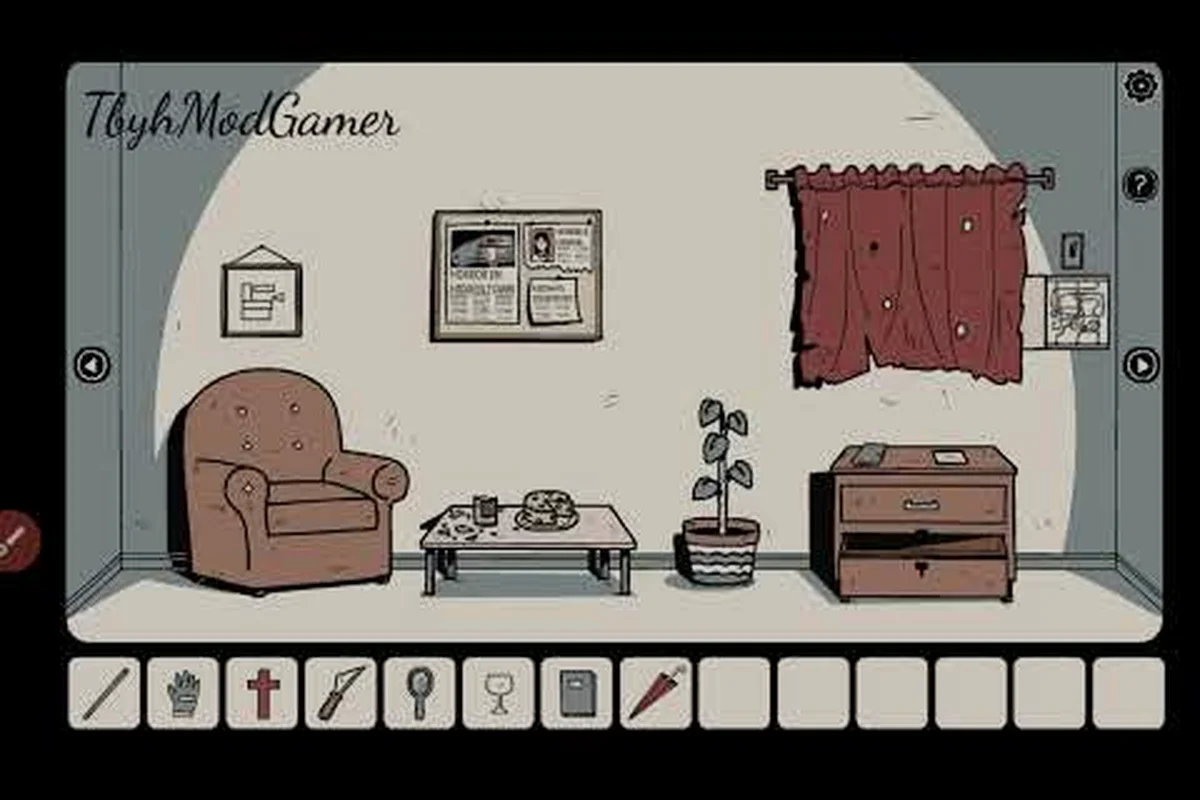
The Girl in the Window narrative explained starts with a single unsettling image: a girl pressed against the glass of a house that nobody in Hidden Town has set foot in for two decades. Dark Dome's first point-and-click title builds its entire mystery on that contradiction, layering environmental clues, fragmented diary pages, and impossible room changes to pull players into a story that only makes sense once the final scene collapses the player's assumptions.
The Setting: Hidden Town and the Abandoned House
Hidden Town is the fictional stage where every Dark Dome mystery plays out, but The Girl in the Window focuses on a specific location: a two-story residence that has been sealed since the disappearance of its last occupant. According to the official Dark Dome site, villagers claim to have seen the figure of a girl looking out from the window of one of the houses, even though the house has been abandoned for twenty years. That single contradiction powers the entire narrative, and the game never lets the player forget it — the question of what happened 20 years ago surfaces in nearly every room.
The town itself behaves like a character. Conversations with shopkeepers, locked diaries, and newspaper clippings all point to a community that has collectively agreed to look away from the abandoned house. Players who approach the story with attention will notice that the few villagers willing to talk use phrases like "we don't go there" and "best left alone," which together establish the silent pact at the heart of the Girl in the Window story meaning.
Key Location Map in the Narrative
| Location | Role in the Story | Information Revealed |
|---|---|---|
| Hidden Town Square | Entry hub | Establishes the town's avoidance of the house |
| Abandoned House Exterior | First sight of the girl | Sets the 20-year mystery hook |
| Ground Floor Hallway | Tutorial puzzles | Introduces the candle, mirror, and match mechanics |
| Upper Bedroom | Flashback core | The diary entries that anchor the plot |
| Basement | Climactic reveal | The truth about the house and the girl |
The upstairs bedroom is where most of the narrative weight lands. Players encounter a child's diary, a broken music box, and a small collection of photos that, when arranged in the correct order, trigger a flashback sequence. That sequence is the single most important story beat in the game, because it is the only place where the game tells players directly what happened 20 years ago — even if the information is partial.
How the Game Tells the Story Without Words
The Girl in the Window is a point-and-click adventure with no voice acting, so the entire Girl in the Window plot is carried by visual cues, ambient sound, and item placement. Dark Dome's design philosophy treats the room itself as a sentence: every displaced object, every locked drawer, every shifted curtain is a clause in the larger story.
Dark Dome rarely tells its story through dialogue; instead, the rooms themselves do the talking. Three storytelling mechanics carry most of the weight:
-
Item displacement: the candle moves between rooms, the music box lid opens when the player isn't looking, and the photograph on the wall rotates 90 degrees. These shifts signal that someone else is in the house, reinforcing the haunting element without any dialogue.
-
Symbol puzzles: the game randomizes symbol order between runs, but the logic — a sequence that mirrors the diary's coded entries — stays consistent. Players who learn the underlying logic can solve the puzzle even when the order changes.
-
Audio layering: a low piano note plays whenever the player is near a story-critical object. Players who play with headphones report catching the change a full room earlier, which makes audio a legitimate scouting tool.
Pacing of Story Beats
| Story Beat | Approximate Chapter | Player's Mental State |
|---|---|---|
| First sight of the girl | Opening | Curiosity |
| First diary entry | Chapter 2 | Unease |
| Photo revelation | Chapter 4 | Active theorizing |
| Music box trigger | Chapter 6 | Suspicion of the protagonist |
| Final room | Climax | Re-evaluation of everything seen before |
According to community data collected from the Steam reviews, players who finish the game rate the music box trigger as the moment the narrative shifts from "haunted house" to "something worse." That single moment is where the Girl in the Window dark story label begins to feel accurate.
The Girl Herself: Ghost, Vampire, or Something Else
The single most debated element in the Girl in the Window narrative explained discussions is the identity of the girl at the window. Players who finished the game have proposed three main interpretations, and the developers have not officially confirmed any of them, which keeps the discussion alive on community forums and in walkthrough comment sections.
Three Leading Interpretations
| Theory | Supporting Evidence in Game | Counter-Argument |
|---|---|---|
| Ghost of a child who died in the house | The diary's final entry, the cold spot in the upstairs bedroom | The girl moves physical objects |
| Vampire or undead being | The locked basement, the way the girl only appears at night | No direct blood imagery in the rooms |
| Memory fragment of the protagonist | The photos match a childhood picture in the upstairs drawer | The girl is seen by the player character before any flashback |
The game's ending supports all three readings in different ways, depending on which rooms the player explored most carefully. The diary entry is the strongest anchor for the ghost reading, while the basement door — which only opens in one specific configuration — pushes the vampire theory. The memory reading, in turn, comes from the photo wall in the upstairs bedroom. For a deeper breakdown of how each theory maps to specific items, the Girl in the Window identity analysis walks through the evidence room by room.
Reconstructing the Night Two Decades Ago
The phrase "what happened 20 years ago" is repeated so often in promotional material and player discussion that it has become shorthand for the entire mystery. The narrative gives the answer in pieces: a family lived in the house, something went wrong, the family left or vanished, and the girl has been seen in the window ever since. Players who piece the diary entries together in chronological order get a clearer picture.
Timeline of the House
| Year | Event | Source in Game |
|---|---|---|
| Year 0 | Family moves in | Newspaper clipping on the ground floor |
| Year 3 | First diary entry from the girl | Upstairs bedroom diary |
| Year 5 | Final diary entry, unfinished | Upstairs bedroom diary |
| Year 5 | Family disappears from town records | Town hall ledger |
| Year 5 – 20 | House sealed, villagers look away | NPC dialogue |
| Year 20 | Player (Dan) enters the house | Game start |
The gap between Year 5 and Year 20 is the heart of the Girl in the Window story meaning. The game never fills that gap with exposition; instead, it scatters small visual cues — a calendar that never advances, a teacup that never empties, a chair that faces a window even when the player moves it — that suggest the house itself is caught in a loop. Players who read the broader Hidden Town lore often connect this loop to recurring Dark Dome themes, but the connection is interpretive rather than confirmed.
The Final Twist and What It Means
The ending of The Girl in the Window is the part of the Girl in the Window plot that players most often want explained, because the final scene recontextualizes nearly every earlier choice. Without spoiling the exact beats, the twist reframes the player character Dan as something other than a purely outside observer. The "haunted house story" structure collapses into a personal reckoning, and the meaning of the game shifts accordingly.
Comparing the Two Common Readings of the Ending
| Reading | What the Player Realizes | Tone of the Ending |
|---|---|---|
| "The girl was never a ghost" | The threat was always internal, and the window was a mirror | Tragic and grounded |
| "The house kept her" | The supernatural reading was correct, and the player was never truly in control | Dark and unresolved |
Both readings are supported by the final room, but the second reading is the one most players report, based on community walkthrough comments. A full breakdown of the final scene, including how to reach the secret variant, is available in the Girl in the Window secret ending guide.
How Environmental Storytelling Builds the Plot
The Girl in the Window plot is unusual in that almost none of the story is told through cutscenes. Every narrative beat lives inside a puzzle room, which means the player's exploration order is part of the story itself. Players who go upstairs before clearing the ground floor will form a different theory than players who do the opposite, and that variability is intentional on the part of the developers.
Room-by-Room Story Contribution
| Room | Primary Story Role | Secondary Story Role |
|---|---|---|
| Foyer | Establishes atmosphere | Hints at the locked basement |
| Kitchen | Introduces daily routine | The teacup loop |
| Living Room | Music box thread | Hidden photo in the chair |
| Upstairs Bedroom | Diary core | Photo wall identity |
| Bathroom | Reflection theme | Mirror reveals player character detail |
| Basement | Climactic reveal | The room that changes between visits |
Players who want a step-by-step summary of how the rooms connect to the diary entries can read the full story walkthrough, which maps each puzzle to its narrative function. Pairing the two makes it easier to tell which clues are atmosphere and which ones are evidence.
Why the Story Works: Design Choices Behind the Meaning
The Girl in the Window dark story label doesn't come from gore or jump scares — there are very few of either. Instead, the tone comes from three design choices that work together to make the player feel complicit in the haunting.
-
The player is locked in. Dan enters the house voluntarily, but the door locks behind him, which removes the option to leave. The game's hint system, praised on the official Steam page, is a sign of how much the developers expected players to get stuck.
-
The puzzles mirror the trauma. Several puzzles, including the wires and the mouse trap, require the player to handle objects that belonged to the family. The act of solving the puzzle is also the act of touching the family's belongings, which is a small but deliberate design choice.
-
The house remembers. Objects shift when the player isn't looking, which makes the environment feel aware. According to community testing, this behavior is consistent across playthroughs and isn't a glitch.
For a closer look at how the diary, photos, and newspaper clippings work together as a single narrative layer, the Girl in the Window Dark Dome story analysis covers the evidence in detail. That cross-reading is where the case stops feeling like a collection of props and starts feeling like one coherent crime.
Practical Tips for Players Who Want the Full Story
Players who want to experience the entire Girl in the Window narrative explained — meaning all the story branches, not just the main one — should keep a few things in mind. The branching here is gentler than in most escape games, so one careless click rarely locks you out of the reveal you came for.
-
Read every diary page before solving the next puzzle. The diary entries are the spine of the story, and skipping one breaks the timeline.
-
Don't move objects back to their starting positions. The game tracks where you put things, and the ending reacts to whether the player has "tidied up" the house.
-
Listen for the piano note. The audio cue is the only signal for which object is story-critical in a given room.
-
Replay with the hint system off. Players who finish the game once and replay without hints report catching visual details they missed the first time, particularly in the upstairs bedroom.
-
Watch at least one walkthrough video after finishing. The Pink's Playstream video walkthrough on YouTube highlights details that are easy to miss in a single playthrough, and comparing notes with a second viewer is the fastest way to lock in the ending you actually got.
Placement Within the Nine-Episode Saga
The Girl in the Window is Dark Dome's first point-and-click game, which means it sets the tone for every Hidden Town title that followed. The recurring themes — abandoned houses, towns that look away, girls who shouldn't be there — all begin here, and the Girl in the Window story meaning is partly the meaning of the entire series. Players who play the Hidden Town titles in order will notice references to the house, the family, and the window throughout later games, though the references are subtle enough that they don't break the standalone experience.
| Title | Series Position | Connection to Girl in the Window |
|---|---|---|
| The Girl in the Window | First | Origin of the abandoned-house motif |
| The Uninvited Guest | Second | References the sealed house |
| The Lost Lands | Third | Hidden Town's deeper mythology |
| Daisy and the Town | Fourth | Recurring "girl in the window" visual |
The Girl in the Window plot, then, is not a closed story. It is the first chapter of a longer arc, and the meaning of the game shifts depending on how many of the later titles a player has completed. The house at the center of the first game is mentioned in passing in later entries, which makes the original title feel like a prologue that doesn't announce itself as one.
Final Takeaway
The Girl in the Window narrative explained, in the end, is a story about a house that holds a memory, a town that refuses to remember, and a player who is forced to see what everyone else has agreed to forget. The game's design — randomized puzzles, layered audio, and a silent protagonist — makes the player work for every fragment of meaning, which is why the ending lands so hard. The plot is short on exposition and long on implication, and the Girl in the Window story meaning is something each player assembles from the same set of broken pieces. The hand-drawn rooms, the cold piano note, and the girl at the window are the puzzle; the meaning is whatever the player decides the silence was holding.
Frequently Asked Questions
What is the Girl in the Window story actually about?
The Girl in the Window story is about a sealed house in Hidden Town where a girl has been seen in the window for twenty years. The player, Dan, enters the house to investigate and uncovers diary entries, family photos, and environmental clues that reveal what happened to the family that lived there. The narrative blends supernatural and psychological readings, and the final scene reframes the entire experience.
Who is the girl in the window?
The girl's identity is one of the most debated parts of the Girl in the Window narrative explained discussions. The game supports three readings: a ghost tied to the house, a vampire-like presence, or a memory fragment connected to the player character. The developers have not confirmed a single answer, and the truth depends on which ending the player reaches.
What happened 20 years ago in the Girl in the Window?
Twenty years before the game begins, a family lived in the house and something forced them to leave or vanish. The diary in the upstairs bedroom, the locked basement, and the town's collective silence all point to a traumatic event that the villagers have agreed not to discuss. The game reveals the event through environmental storytelling rather than cutscenes.
Is the Girl in the Window story connected to other Dark Dome games?
Yes. The Girl in the Window is the first game in Dark Dome's Hidden Town series, and several later titles reference the abandoned house, the family, and the girl at the window. The connections are subtle enough that the first game still works as a standalone experience, but playing the series in order adds extra context.
What does the ending of the Girl in the Window mean?
The ending reframes the player character Dan as something other than a purely outside observer, which turns the haunted-house story into a personal reckoning. The exact tone — tragic and grounded, or dark and unresolved — depends on the choices the player made earlier in the run. The secret ending variant extends the story further and is the one most players discuss online.